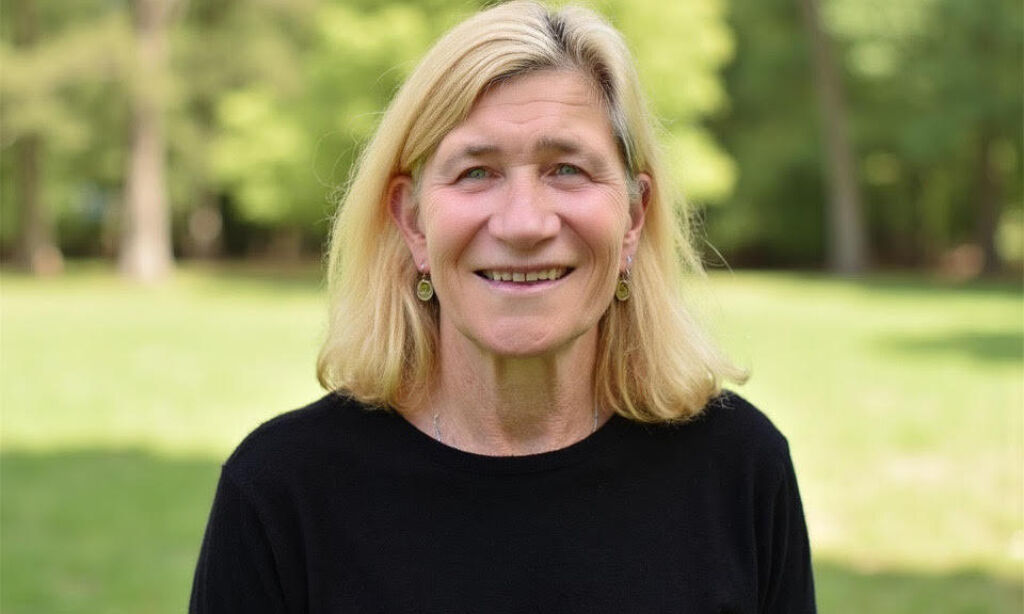
Jules Sherman took the leap from designing home goods to bioengineering medical devices–a shift made successful, in part, by the instruction she received at the d.school.
Today, Jules is the founder of consulting group JS Design Group and a freelancer in the human-computer interaction space with a focus on medical applications. She joined Stanford’s Joint Program in Design in 2010 after many years of designing consumer products for major retail brands. Her design work relies heavily on research and navigating the complexities of the medical field. “I always begin a project by reviewing the existing research and speaking with key stakeholders to understand the problem from multiple perspectives.” says Jules.
Turning point and teaching
In 2010, Jules entered Stanford’s Joint Program in Design with a focus on maternal healthcare, inspired by her own traumatic childbirth experience just months earlier. “That experience was deeply formative for me, and Stanford became a major turning point in my life, my career, and the way I think about design going forward.”
Prior to that, she had designed home goods, things like architectural hardware, kitchen housewares, and fashion-driven home accessories. But once she entered the d.school, she decided to focus her design skills on helping others, especially parents who might go through what she had experienced.
Though she felt like the odd one out as one of only a handful of women in the program and as an older student, she appreciated her teachers immensely. “Their instruction was golden and extraordinarily good. I appreciated it so much and the d.school helped me figure out my North Star. It was a great period in my life and a great place to explore my next chapter.”
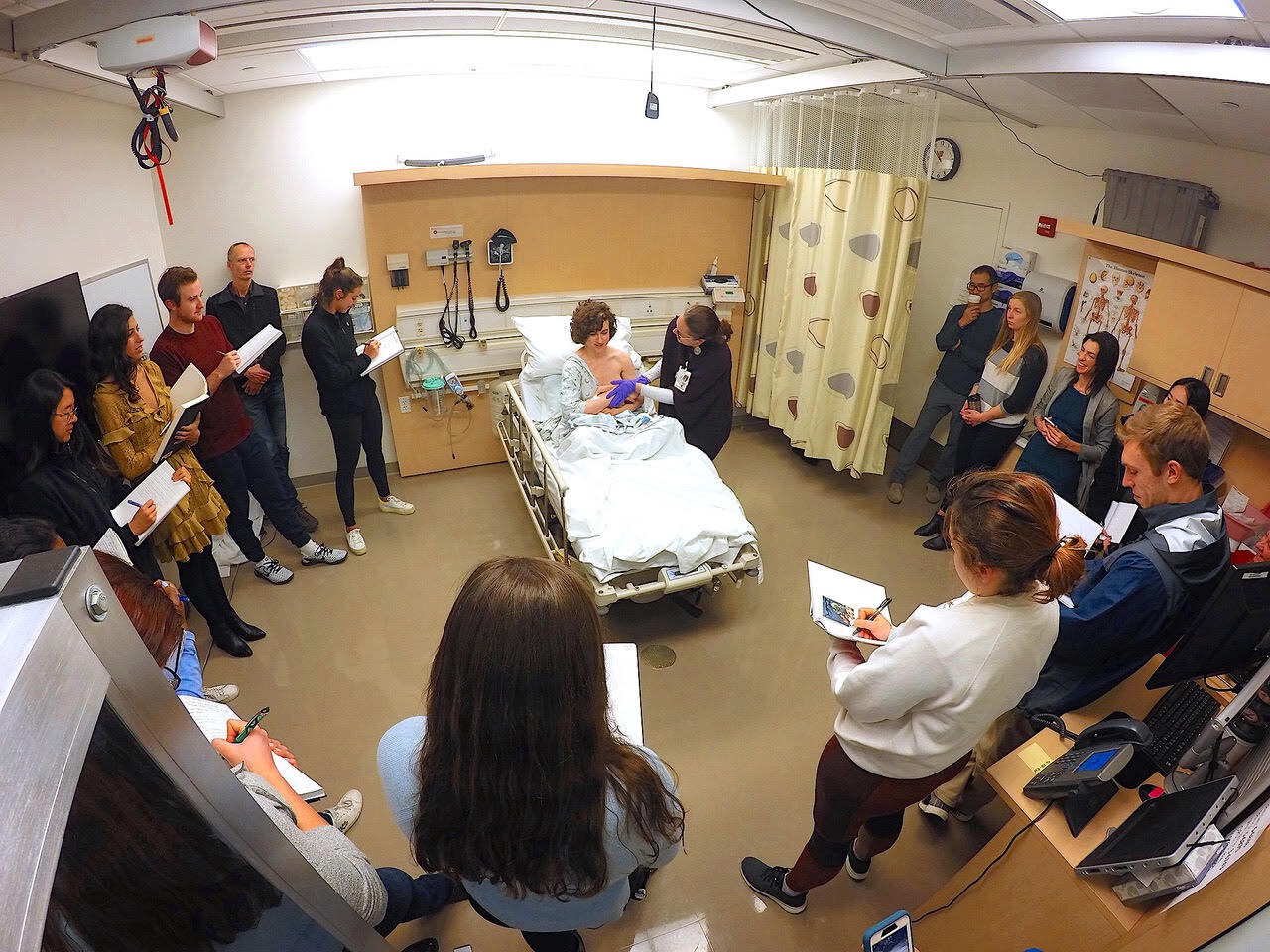
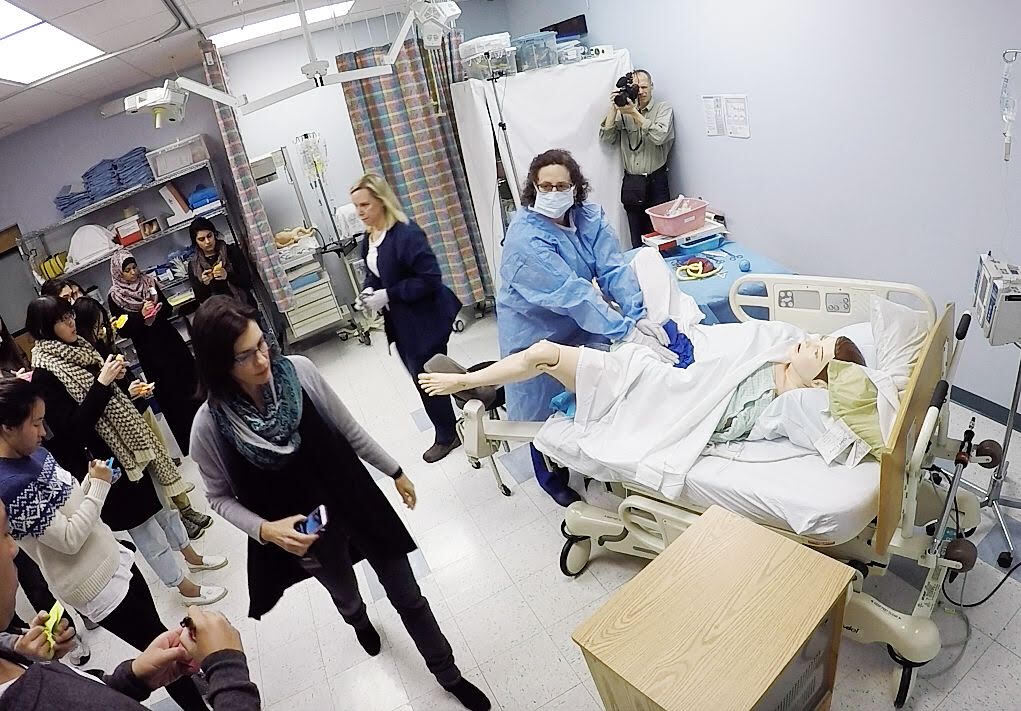
Jules credits Dr. William Rhine, former NICU Director at Lucile Packard Children’s Hospital (LPCH) and an advisor on several of her medical product innovations, with giving her the confidence to begin teaching at Stanford’s d.school, where she went on to teach for six years with other physicians. Together, they co-taught her first course, Redesigning the Hospital Birth Experience. “Those years were among the most impactful of my life. Teaching at the d.school was a privilege and a wonderful learning experience for me.”
Making designs and making sense
When she started designing for the medical field, Jules came to appreciate a new angle of conducting research. “Once you start doing research with the people you’re trying to serve, you start to care,” Jules said. “Care comes from understanding the problem and learning from people, and research is clearly the pathway to caring.”
Jules’ work involves making sense of what she observes while shadowing doctors, talking to stakeholders, and speaking to patients and their caretakers. “Designing medical products and devices requires much more than creating an innovative solution. You also have to navigate FDA regulations, develop a strategy for regulatory clearance, design clinical studies, and secure Institutional Review Board approval for testing in hospitals. There are so many layers to bringing a medical product to market that extend well beyond the design itself.”
A pivotal moment for Jules was having her first medical device she designed, Primo-Lacto®, be acquired by Lansinoh, a large breastfeeding products company. Primo-Lacto is designed to collect colostrum for mothers who cannot or choose not to breastfeed directly after birth. “It was very empowering to launch a product I co-developed with mothers, nurses and neonatologists into the world.”
Other products she has co-designed with clinicians include protective devices that prevent IV and G-tube disconnections; Trach-Sense, a monitoring device for pediatric patients with tracheostomies; improved PPE gowns designed for better fit and protection; and the Kangarobe, a garment that supports skin-to-skin care in the NICU. Each of these innovations reflects the same design philosophy: grounding solutions in deep research and iterative prototyping to ensure they work not just in theory, but in real-world clinical settings.
Jules values the “quirkiness” of initial prototypes. “When you’re new to the problem space, you’re able to come up with unusual ideas because you don’t know all of the limitations. Being humble is part of the job description. As a medical product designer, you have to be willing to be a beginner and ask a lot of questions. “The art of effective interviewing is moving beyond answers like, ‘That’s just how we’ve always done it,’ to uncover the reasons behind current practices. Equally important is creating a safe space where clinicians feel comfortable questioning those practices and exploring new possibilities.”
Innate curiosity is a big part of what drives her research, which she says she enjoys most. “Really understanding the problem, the front-end work—that’s the juiciest work of all,” said Jules. “And then developing potential solutions, translating the needs and insights to something you can actually make and test.”
Constantly learning
While Jules has stayed in the world of medical design, she was inspired to go back to school to study how digital and physical tools can work together in medicine, and recently graduated with a masters in human-computer interaction and design (HCID). “My inspiration comes from families who have kids who are very sick, from clinicians who are burned out and tired of doing things the same way, and from witnessing what’s happening for people who don’t have access to good healthcare.”
For her graduate capstone project at UC Irvine, she worked with a team at the Pediatric Palliative Care Idea Lab at Mass General Brigham Children’s Hospital to redesign PediQUEST, a diagnostic tool for children experiencing pain while receiving palliative care, which now includes a check-in on their caregivers as well.
Jules has recently re-booted her consultancy after earning her MS and is working as a brain-computer interface designer for a stealth start-up, developing interfaces that enable people with ALS or brainstem strokes to communicate through technology while maintaining autonomy and control over their speech.
Her advice to new designers is to never stop learning, exploring, and chasing what you care about.
“There’s so much to learn and understand about the field you’re designing for. That’s what keeps me passionate about design: the opportunity to keep learning,” said Jules. “I believe the key to being a successful designer is staying curious about people and finding problems you genuinely care about solving. I’ve always asked myself and my students at Stanford and UMD a clarifying question, ‘Who do you want to help?’ I think that’s where finding your path as a designer begins.”
Credits
Thanks to Tran Ha and Amalia Rothschild for originally interviewing Jules for the d.school’s “This Is Design Work” exhibition; Mark Grundberg for shaping the interview content; Second Peninsula for producing the video; the d.school’s academic team and teachers for guiding generations of designers; Eli Ramos for writing this article; and Jenn Brown for her persistently collaborative editing.