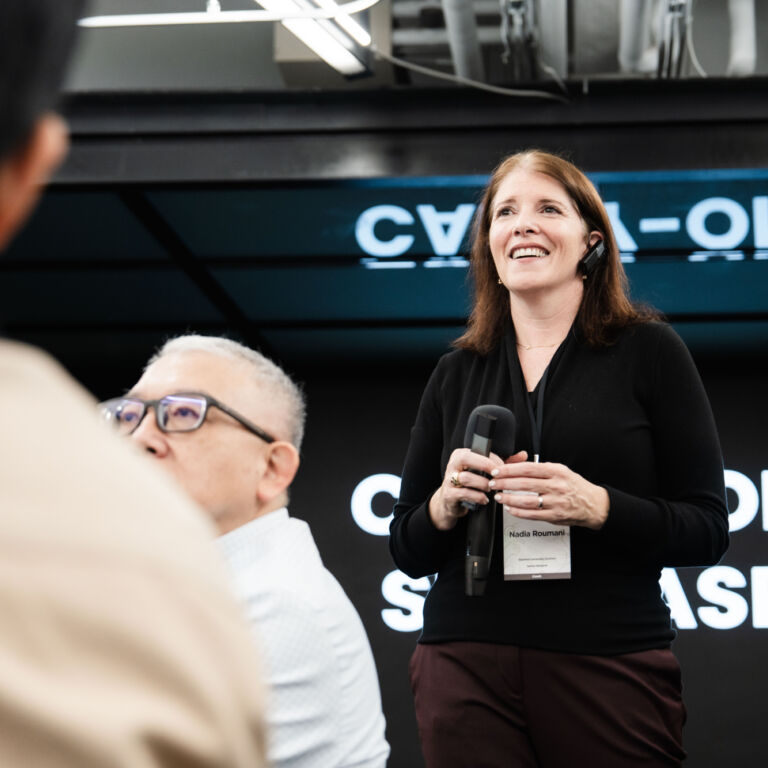
Senior designer Nadia Roumani has built her career at the intersection of strategy and human-centered design, helping social sector leaders navigate complexity while staying grounded in the real needs of the people they serve. In this piece, she talks about how integrating strategy and human-centered design in the social sector is not just a technical challenge—it is an emotional one. Alongside her long-time d.school collaborator, Thomas Both, she continues to advance an integrated approach of human centered design and strategic planning, including through an upcoming workshop with Stanford Social Innovation Review, designed to help leaders strengthen their strategy without losing sight of the humans at the center of their work.
The Hidden Emotional Work of Strategy and Design

In my recent piece, I explored why strategy and human-centered design belong together: strategy provides direction; design enables learning. Many leaders grasp this conceptually, but struggle to apply these approaches in practice. Why?
The barrier is not a lack of commitment, intelligence, or even tools—though integrated frameworks are still limited. The real hurdle is emotional. More specifically, in the social sector, we collectively fail to name the emotions these processes surface and to help practitioners navigate them.
Emotions in strategy? Yes. Strategy is often framed as rational and analytical. But in the social sector, strategy is deeply emotional. Every decision carries moral weight: Who do we prioritize? Where do we start? What happens to those we cannot reach?
Emotions are also in human-centered design (HCD). HCD is a problem-solving process, but one that investigates deeply human issues by clarifying who we are designing for and by uncovering underlying needs. Here too, decisions become emotionally complex: Who are we truly designing for? How do we honor their stories with limited resources? How can we sit with insights we’re not ready to address as an organization?
Both approaches are rooted in ambiguity. Both require moving forward without certainty. And both surface emotions that often go unnamed in organizational life—especially in mission-driven work.
As human-centered educators, we spend significant time helping practitioners clarify what they are trying to change and attend to the emotional needs of the people they serve. Yet we often overlook the emotional journey of the practitioners themselves. In our focus on uncovering insights and driving impact, we fail to name and support the emotions leaders experience as they navigate this work. Social sector leaders are not merely vehicles for change; they are key stakeholders in the process. If we teach frameworks and tools without supporting the emotional labor of social change, the cost is high—not only in reduced effectiveness, but in burnout and growing dissatisfaction with the work itself.
Strategy as an Emotional Act
Social sector leaders operate in a near-constant state of urgency—responding to crises; managing scarcity; and meeting expectations from funders, boards, staff, and communities. Strategy forces choices under uncertainty, and those choices rarely feel neutral. They are infused with care, responsibility, and often guilt.
I see this most clearly when teams are asked to narrow focus or clarify outcomes. For leaders deeply committed to equity and service, prioritization of one group can feel like abandonment of another.
In one coaching session with nonprofit leaders working on mental health access, the simple question, Who are you specifically trying to reach? led to tears:
- “How can we choose?”
- “If we don’t serve them, who will?”
- “Who are we to prioritize one group over another?”
This reaction isn’t about strategy in the abstract. It’s about scarcity, moral responsibility, and the painful reality that needs far outstrip resources. Many leaders hold a quiet hope that if they don’t limit their vision, serving everyone might somehow become possible.
This is why strategy often becomes a series of emotional decisions disguised as analytical ones.
But prioritization is not about reducing impact. It’s about increasing it—moving from aspirational intent to tangible, real-world change. Over time, I’ve moved away from the language of narrowing altogether. Instead, I ask: Who might you start with? Starting somewhere is not the same as stopping elsewhere. It’s a commitment to focusing and learning, not abandonment.
The Emotions that Surface in Human-Centered Design
Human-centered design introduces a related, but distinct, set of emotional challenges.
Many social sector leaders already work closely with communities. What draws them to design is the rigor in the process: slowing down, uncovering deeper needs, and breaking free from habitual solutions. For many, this work reignites why they entered the field. And yet, emotions quickly surface.
Leaders ask:
- “How do we address all the needs we’ve uncovered when we lack the capacity to meet them?”
- “Is it ethical to prototype with under-resourced communities if it raises expectations?”
- “How do we honor the voices we’ve heard when we must still make tradeoffs?”
There is also the emotional challenge of practicing design inside institutions that lack an innovation culture:
- “Will leadership see this as learning—or as distraction?”
- “Is it safe to share unfinished work?”
- “How do we make time for iteration when delivery pressures are relentless?”
Design invites behaviors—prototyping before certainty, sharing work-in-progress—that often feel risky in systems that reward polish, predictability, and control.
For many practitioners, this creates a sense of exposure without institutional cover. Design can surface uncomfortable truths about gaps between intention and impact— truths social sector practitioners may not yet feel supported to confront.
The False Safety of Extremes
When emotions go unacknowledged, teams often retreat to what feels safe.
One response is over-specification: projecting certainty through detailed plans and concrete activities, even when the situation remains unclear. Saying “we don’t know yet” can feel like a failure of leadership rather than an honest assessment.
The opposite response is over-breadth: keeping strategy intentionally vague to avoid conflict. Big umbrella language can create surface harmony while masking deep confusion about what an organization is actually trying to do.
Both extremes serve emotional needs—protection from vulnerability on one end, protection from conflict on the other. However, neither produces clarity.
Aligning a team towards focus and clarity is not tidy. It requires discomfort, negotiation, and what one leader once described during a coaching session as “very useful agitation.” Avoiding that agitation may feel easier, but it comes at the cost of focus, learning, shared direction and ultimately, real human-centered impact.
Leadership as Emotional Stewardship
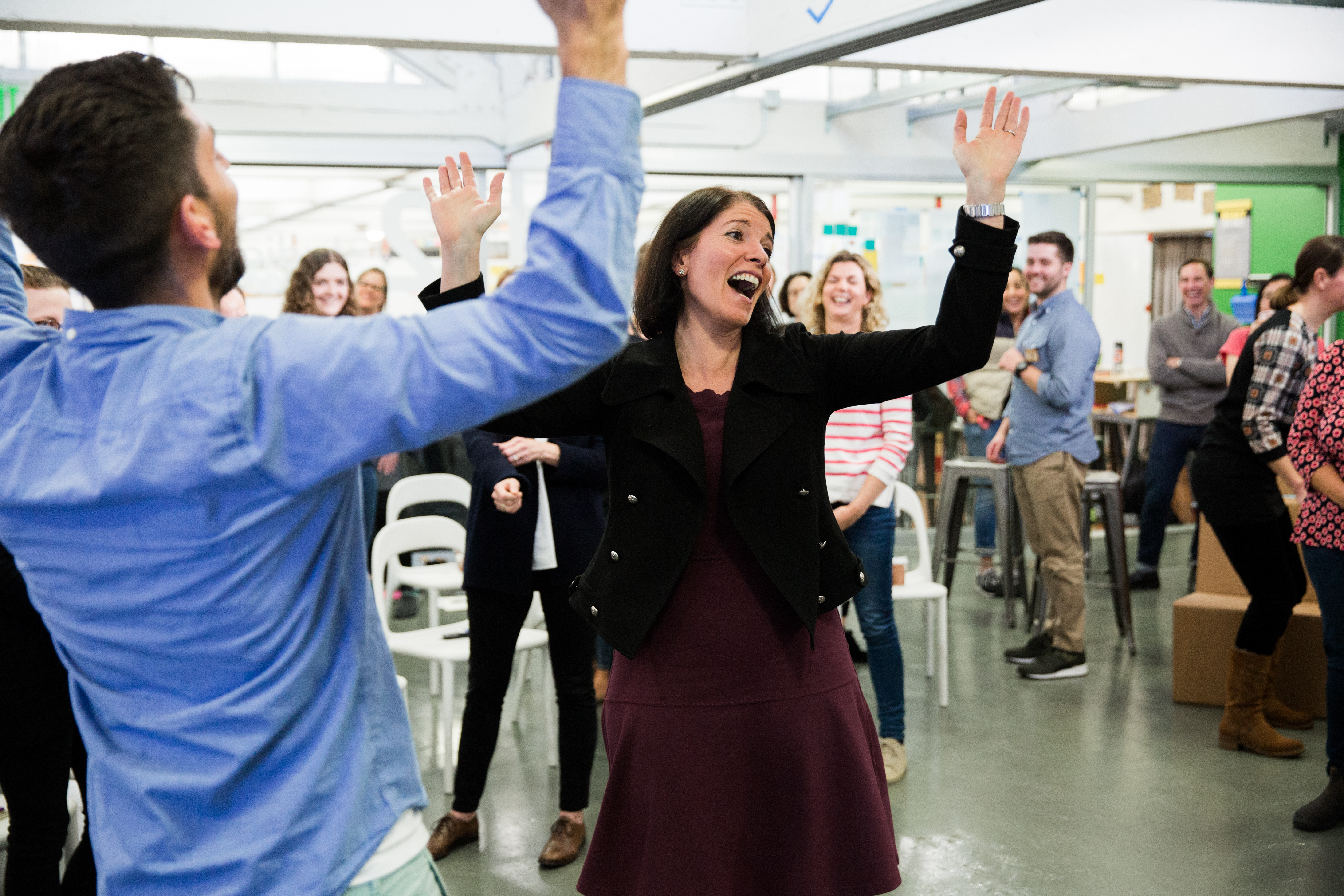
When strategy and human-centered design are practiced together, leadership fundamentally shifts.
Leadership is no longer about providing certainty; it is about helping teams move through uncertainty—channeling overwhelm into focus, conflict into productive disagreement, and guilt into clarity about where contribution can begin.
In strategy, leaders must help teams understand why prioritization matters, make sense of competing insights, and align resources with where the organization can contribute the greatest value. Strategy is not an exercise in semantics; it is about making, and standing behind, hard choices
In human-centered design, leaders must name and normalize the emotions that arise. They must support developing self-awareness, confronting bias, listening ethically, and caring without carrying the full emotional burden of others’ experiences.
When these approaches are integrated, leadership becomes an act of attunement —knowing where teams are in the work, how design insights inform strategic decisions, and when emotional discomfort is a necessary precursor to clarity. Simply naming and tracking these emotional dynamics is a powerful start.
Strategy and human-centered design ask leaders to care deeply and choose deliberately.
Integrating these approaches requires intellectual and analytical rigor—but what ultimately distinguishes effective leadership here is emotional capability.
When leaders acknowledge and support the intellectual AND emotional demands of this work, they strengthen their organizations. Meaningful, human-centered impact does not come from certainty—it comes from building the capacity to navigate uncertainty together with integrity, honesty, and care.