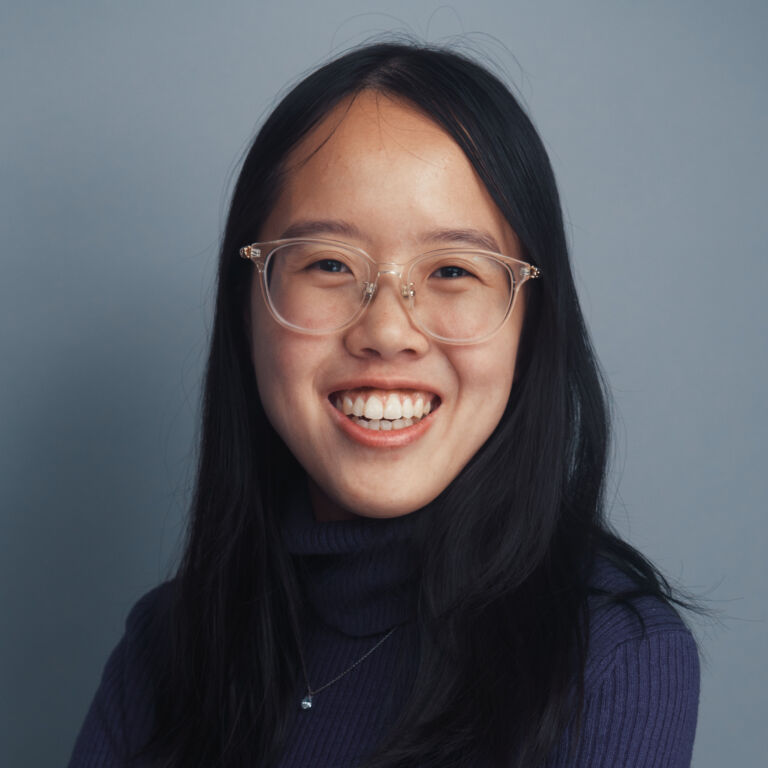
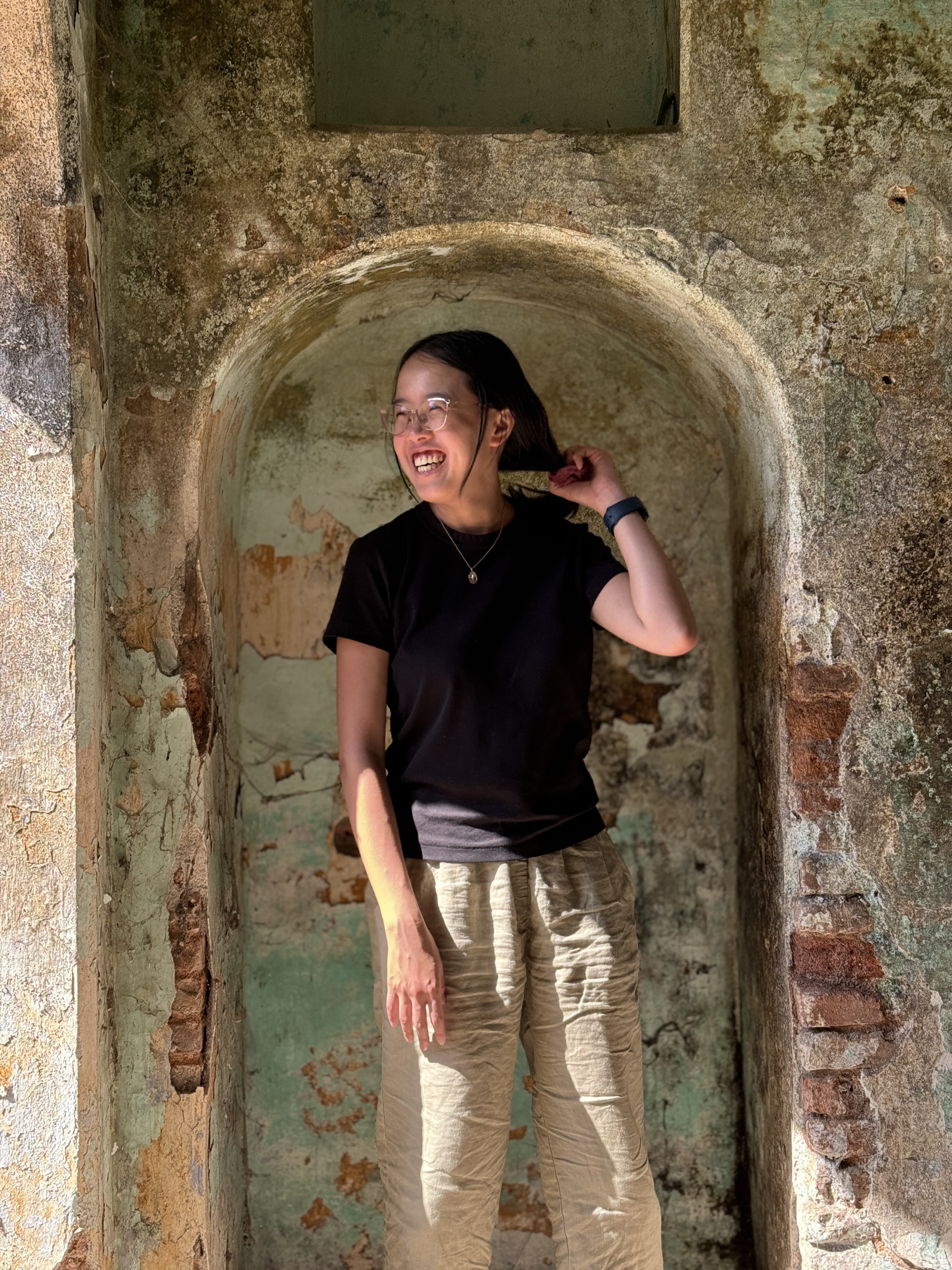
Gloria Chua found her superpower at the d.school: creating a way to make the intangible real, and truly making people understand that anything is possible. It's something that serves her well as a Design Manager at the Ministry of Education in Singapore.
d.school days
Gloria knew about the d.school far before she entered it—and once she did, she spent a lot of time with the institute. As a product design major, she jumped straight in: took classes, served as a tour guide, and worked on projects. One of those projects, Project Wayfinder, is a toolkit still used by high school students to help them develop resilience and encourage them to contribute to their communities.
The d.school’s “spirit of relentless optimism” is something she still carries with her to this day, along with the breakdown of design abilities like macro/micro views and her ways of navigating ambiguity.
“I’m absolutely super grateful for everyone that I’ve learned from at the d.school.To me, design is a manifestation, creating clarity out of ambiguity,” said Gloria. “We do that to create products, services, and tools to reduce friction between intention and action.”
App-lied design
Gloria’s career has taken many turns, but they all have one throughline: “A large part of my different roles has been giving design a seat at the table.”
In San Francisco, at her first job at Dropbox, she said, “I was exposed to so many world-class designers. I could see what good design looked like—I saw so many flavors of it. It gave me the idea that I can be the designer I want to be.”
Then, when she was pulled to Singapore for the first time, it was a completely different setting than the tech sector in the Bay Area. Gloria led the redesign of a user-facing digital identity app. During the height of COVID, it was even used for contact tracing. Because of its widespread use, Gloria paid special attention to working with the elderly, adding multilingual support and accessibility tools. The app is still used to this day.
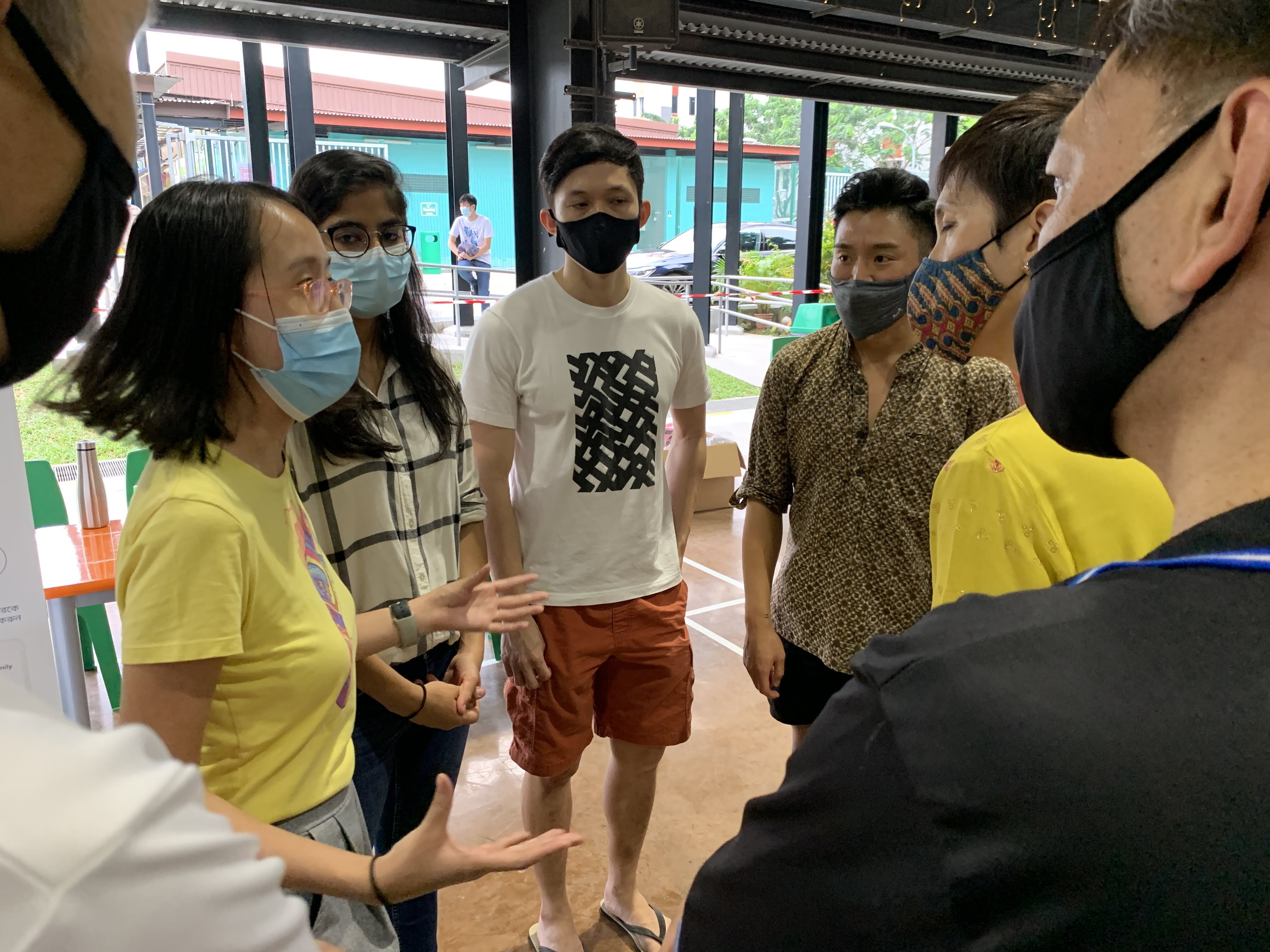
A passion for working with underserved communities then led her to a different project, an app named Call Home. While dormitories in Singapore were in lockdown during COVID, she and her friends built the calling app to help 900,000 migrant workers reach their families. “It was cool building relationships in those communities… it was a deeply rewarding experience,” said Gloria, who was able to connect despite not speaking Bengali or Burmese, yet integrated them into the app.
Diverging and converging
Gloria left Singapore for New York, chasing ambiguity in a different sector: cryptocurrency. During her time at Anchorage Digital, a global crypto platform, she was more often surrounded by finance experts than designers. “I was there from the early conception of this network project to the launch of the settlement network. It was gnarly, with a lot of stakeholders and ambiguity, so it was important to have someone in the room to take this into something tangible.”
After three years, Gloria returned to Singapore, and to work that centers around the social impact of technology and its interactions with community. “From the Bay Area to New York to Singapore, I feel that I spent time diverging so that I could converge those ideas here and now.”
Now as a design manager, Gloria leads 11 designers at the Singapore Ministry of Education. Drawing from her time working on Wayfinder, she now is helping to create platforms that streamline teacher workflows while centering their expertise and reflection tools for students that they actually want to engage with.
“My job is to marry different perspectives and find overlap–it’s a superpower of designers to unpack what goes beyond words,” said Gloria. “My role as a designer is to figure out what the biggest question is at any point, then make it visible so people can solve it together.”
True to yourself
“I’m someone with many varied interests,” said Gloria. “The flexibility and versatility I’ve built into my own career is what makes it enjoyable for me.”
While she found fintech intellectually stimulating, she said she was drawn back again and again to the communities she cared about in Southeast Asia, as well as to education. “I’d done edtech at the d.school, but I was afraid of jumping into that space–it’s notoriously difficult to succeed in,” Gloria said.
Gloria was excited to bring the skillsets she’s picked up over her career to the position. As she’s built each new layer of her career, she’s held onto the question of “What strengths do I want to bring?” One framework Gloria uses is how different threads intersect. “I think about my design work as always evolving and intersecting.”
To designers following her path, she tells them, “Think about what design broadly means and then pursue that road.” Especially as AI becomes more prevalent, Gloria says, “Designers need to tap a lot more deeply into who they are and what they truly value, and let that show up in their work.”
“Seek out your ‘hell yes’—what you’re most drawn to—and commit to it,” says Gloria. “During the journey, it’s hard to see how it all connects. But trust your instinct, trust the process and navigate that ambiguity. There’s no wrong decision. Every path will lead somewhere and will be the right path.”
Credits
Thanks to Tran Ha and Amalia Rothschild for originally interviewing Gloria for the d.school’s “This Is Design Work” exhibition; Mark Grundberg for shaping the interview content; Second Peninsula for producing the video; the d.school’s academic team and teachers for guiding generations of designers; Eli Ramos for writing this article; and Jenn Brown for her persistently collaborative editing.