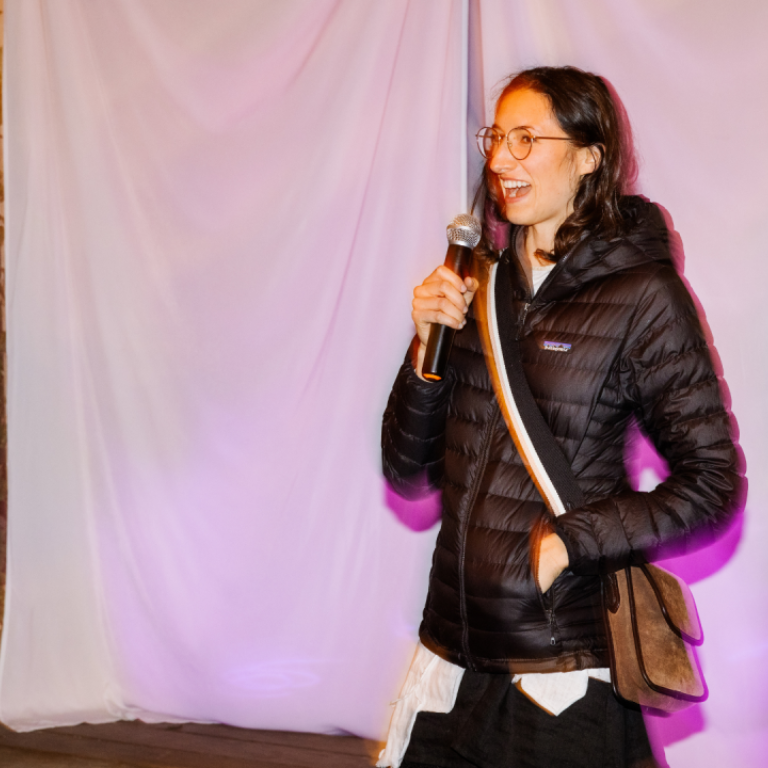
Every year, students develop a Personal Statement: a work that uniquely represents who they are. They then share this work with the rest of the design community on a special Personal Statements Night. This project allows the designers to combine a physical product that is imbued with their emotions and values with a shared user experience. Mollie Redman shares her 2025 Personal Statement project in her own words.
Introduction: Many ways of making
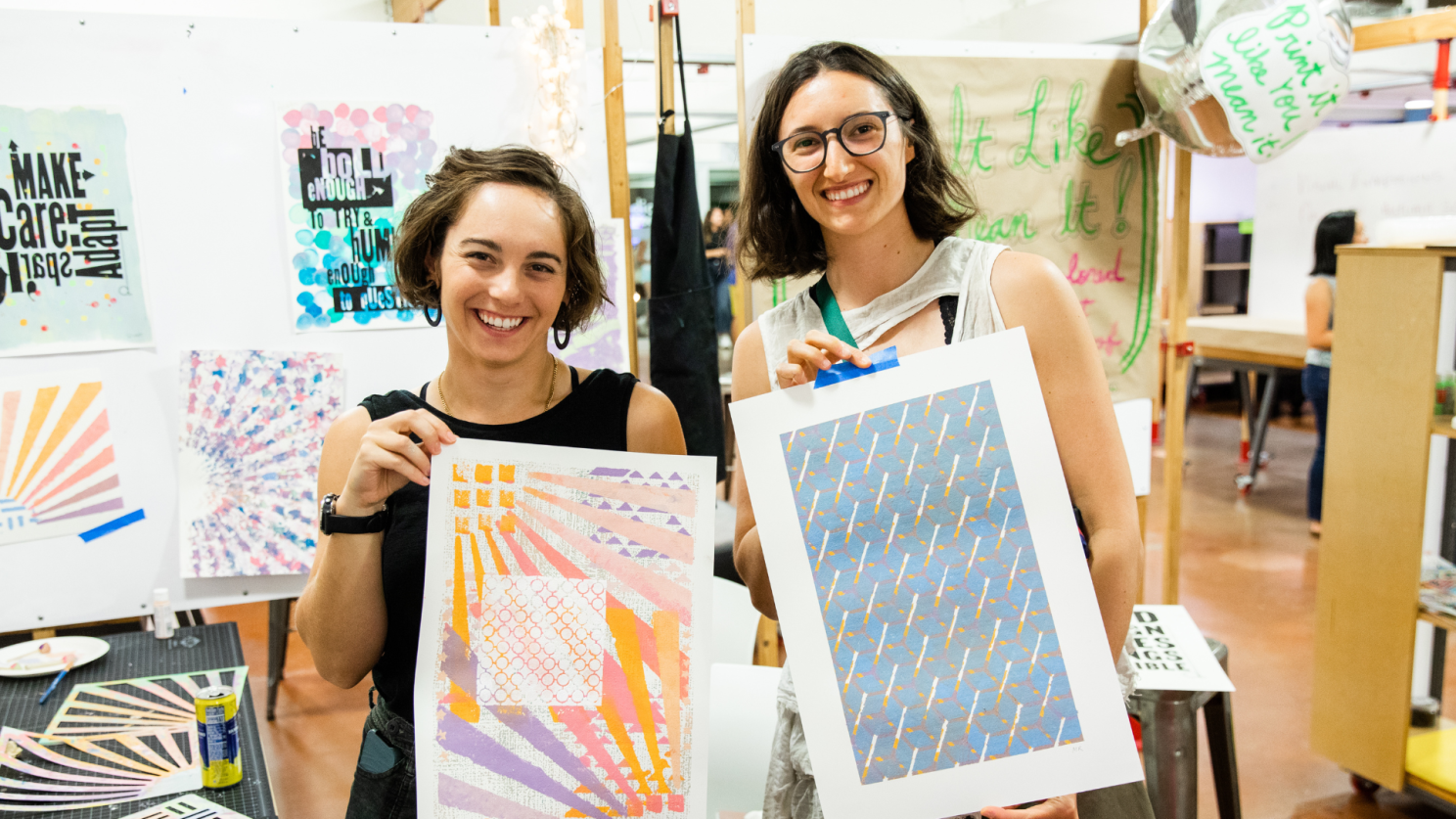
Before arriving at the d.school, I thought of myself as a maker of physical objects; however, less than two years later, I am beginning to think of myself as a maker of software-based things as well. Learning new mediums for making has always been exciting for me; from glass blowing, metalworking, sewing, and everything in between, adding new tools to my tool belt expands my mind. When I arrived at Stanford, my computer science skills were minimal, but through the Design program I have been able to explore new realms of making for myself!
My path into the world of software has been atypical, to say the least. I don’t have any formal training in computer science, and I ended up stumbling into the discipline through the medium of music. I have taken a host of classes at CCRMA (Stanford’s Center for Computer Research in Music and Acoustics), which is where my interest in sound and software took root. Taking classes there got me thinking about art, design, and technology in a completely new context. The challenge of learning something totally new felt daunting at first, but my mentors at the d.school continually encouraged me to explore my curiosities, even if it was outside my comfort zone
Process: Evolving through mediums
To kick off Personal Statements, we were provided a transcript from Professor Emeritus Matt Kahn’s take on the project back in 2006 – it is perhaps the most clear description of what the project is all about and what it is not. In my words, I would describe it as an opportunity to express ideas, thoughts, or feelings through a form which acts as an extension of oneself.
From a high level, my Personal Statements process looked like this: song → sketch → software programming → painting.
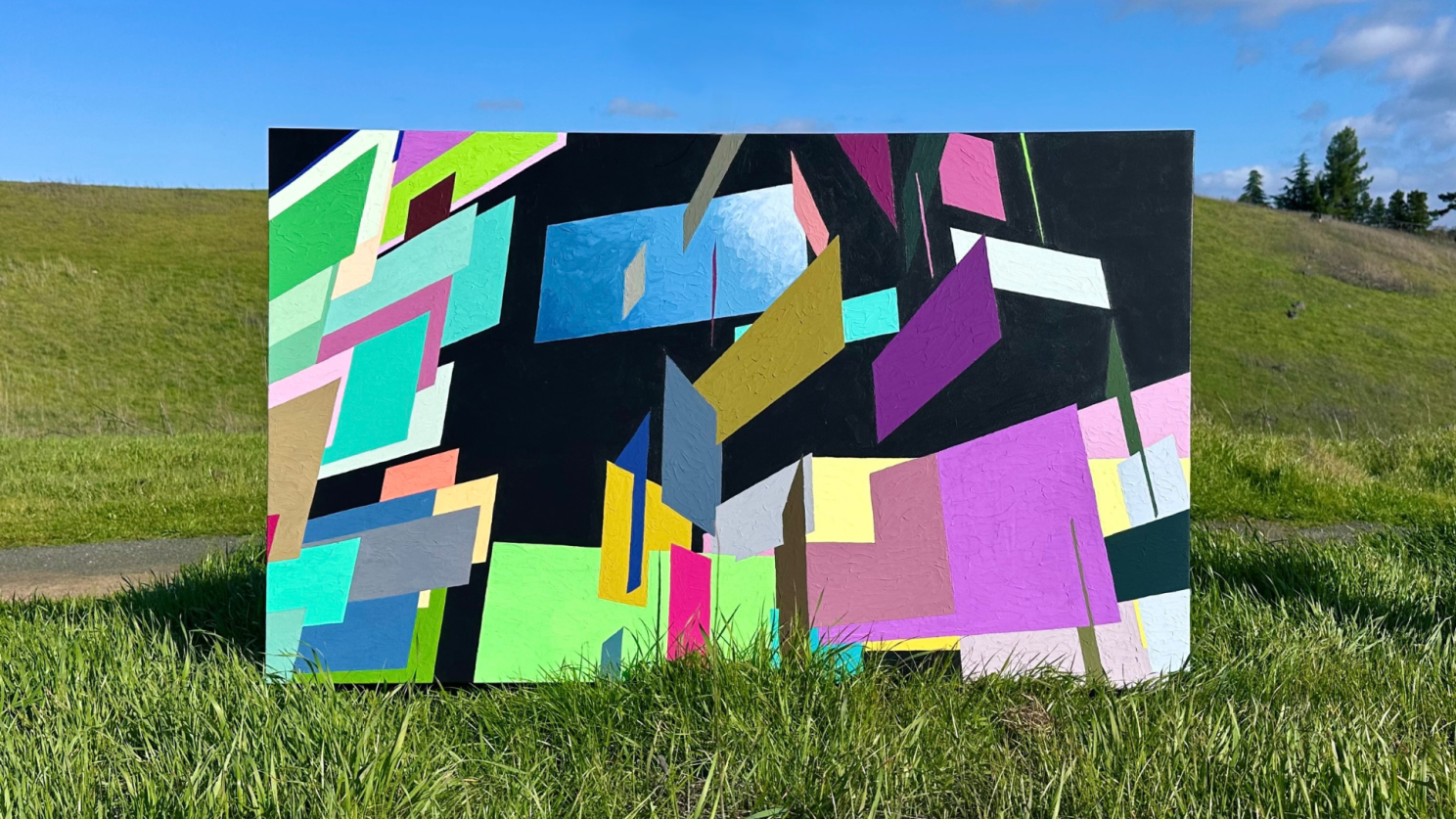
First, I came up with an initial rough sketch while listening to the song Für Alina by Arvo Pärt. I am taking an introductory piano class this quarter, and hearing the beautiful simplicity of the piano in this piece made me contemplate how foundational forms (in my case, rectangles) can be composed in elegant ways. Next, like any good designer, I made a prototype of my idea. Using the graphics library of the software program ChucK (credits to Ge Wang for creating the language and Andrew Zhu Aday for developing ChuGL), I built a computer graphics version of my initial idea. The motivation for switching to code came from my desire to visualize the idea at a large scale with accurate geometry, utilizing the strengths of the tool. At the same time, I added elements of programmed randomization that resulted in some computer-human collaboration, less AI. When I was in the software world, the idea evolved in a way it could not have on paper.
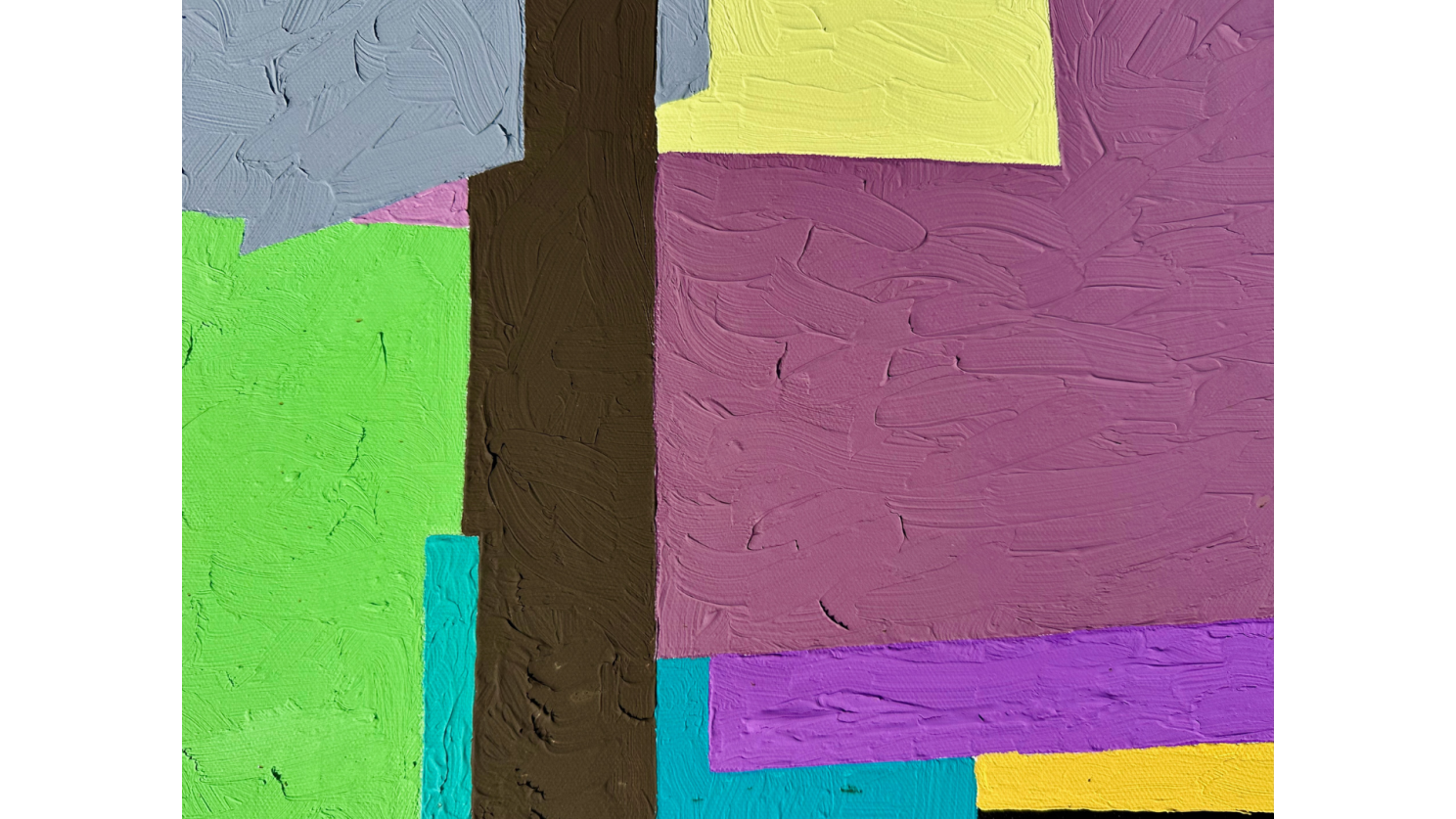
Similarly, when I translated the digital version into a 3’x5’ painting, welcomed surprises transformed the piece further. Unexpected discoveries are my favorite part of the making process because it requires an openness to accept what you did not expect. Yes, I had a plan and a structure, but I let my intuition guide me, resulting in a pathway that felt authentically like myself.
Impact: Bringing coding into the painting process
I have painted many things in my life, however, this was the first time code was a part of my painting process, and that surprised me. Personal Statements revealed changes in me that I did not expect. Yes, I am still capable of making physical things, but now software is a core part of the way I think, experiment, and build. It is an exciting transition, and I am looking forward to continued exploration in software and sound during the rest of my quickly disappearing time at Stanford!
If you're interested in learning more, follow me on LinkedIn or email me at mollier@stanford.edu.