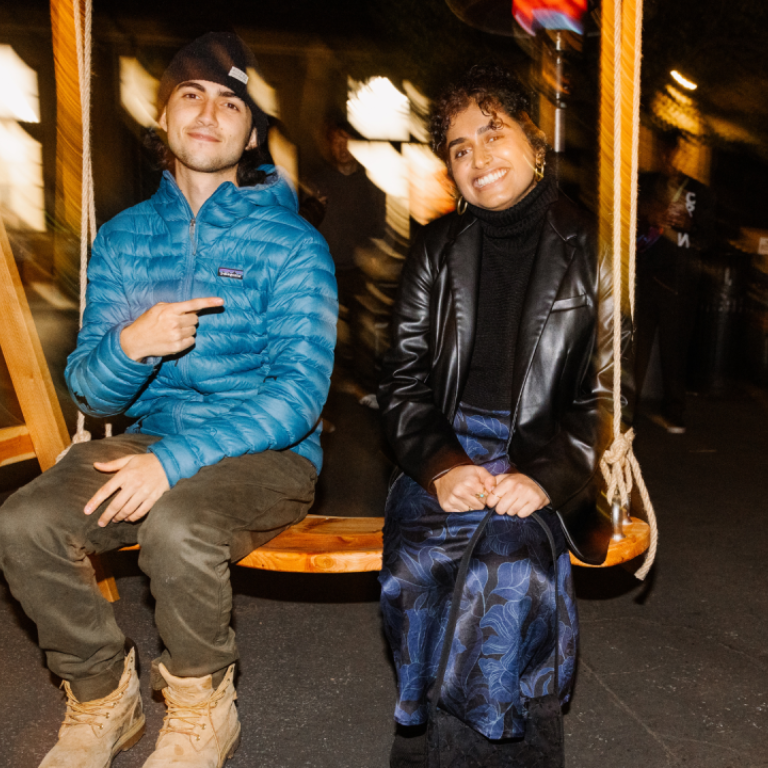
Every year, students develop a Personal Statement: a work that uniquely represents who they are. They then share this work with the rest of the design community on a special Personal Statements Night. This project allows the designers to combine a physical product that is imbued with their emotions and values with a shared user experience. Kavya Udupa shares her 2025 Personal Statement project in her own words.
alone together by Kavya Udupa
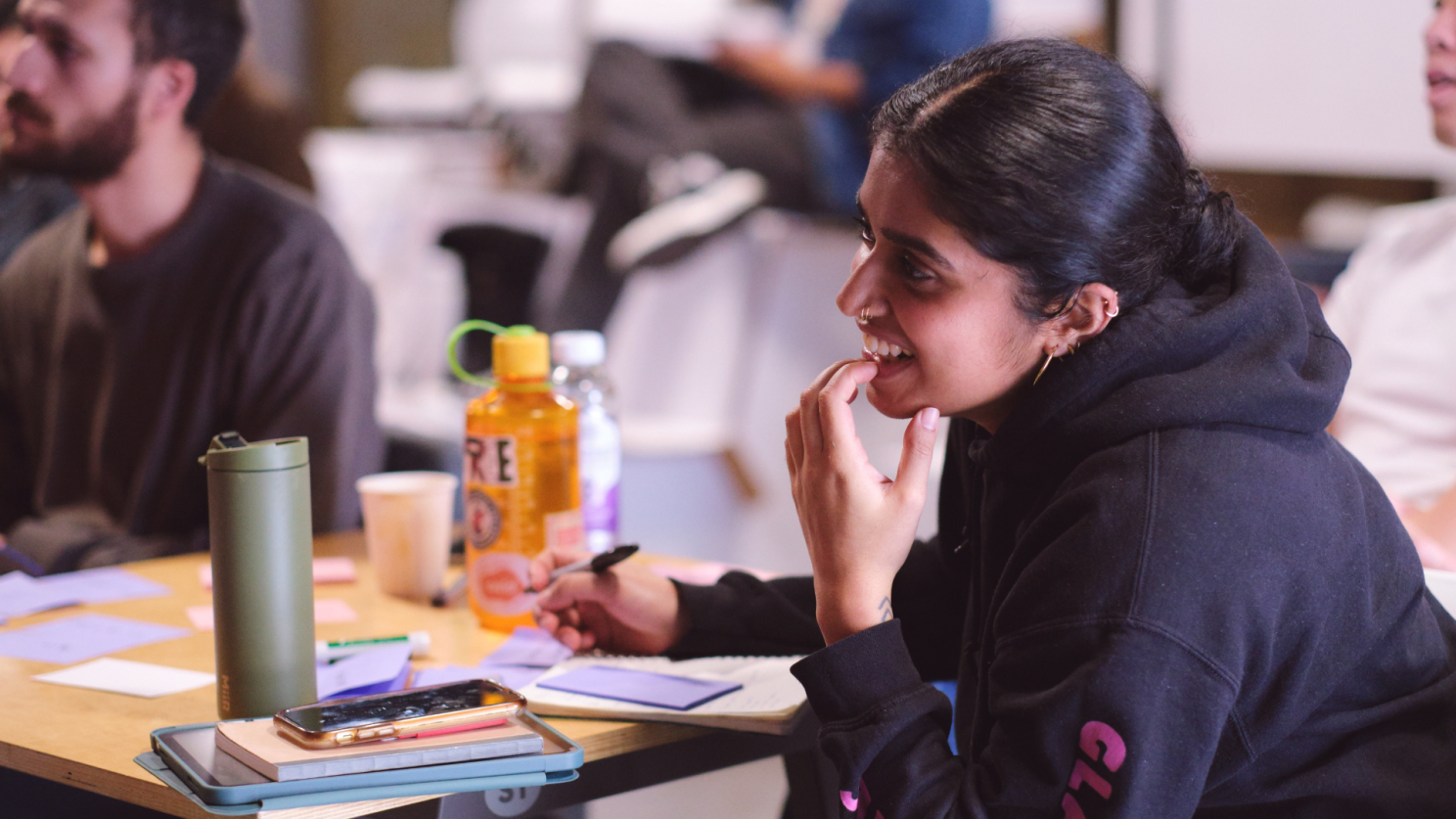
Before coming to Stanford, I studied Mechanical Engineering at The Cooper Union and worked as an engineer in the toy industry. Since my junior year of undergrad, I have been intrigued by the power of design: the opportunity to work with people to design objects and experiences that could be incorporated daily. This led to a desire to work in consumer products and to me joining Spin Master after graduating, where I worked on outdoor toys under a variety of brands and worked with many teams to prototype, design for manufacturing, test, and cost many amazing products.
The work was incredibly dynamic and inherently interdisciplinary—things I deeply appreciate in my work—but the pandemic made me realize that the aspects of design and engineering that excited me when I was younger weren't being tended to. I needed to shift how I viewed my work and make it more aligned with what I care about, but also rethink how I view my community and show up for them. Hence, the decision to apply and go to graduate school!
Having the time to reflect solely on who I am and what I want to design has been an opportunity I’ve never had until this program. Here at the d.school, I’m able to explore what I feel drawn to and why, ask questions that feel seemingly idealistic yet imperative, and converse with people of such different lived experiences and perspectives. I’ve been able to hone in on my crafts, discern what values I want to carry as a designer and explore how those values show up in my work. I’m incredibly grateful to have been given this privilege.
Personal Statement: alone together
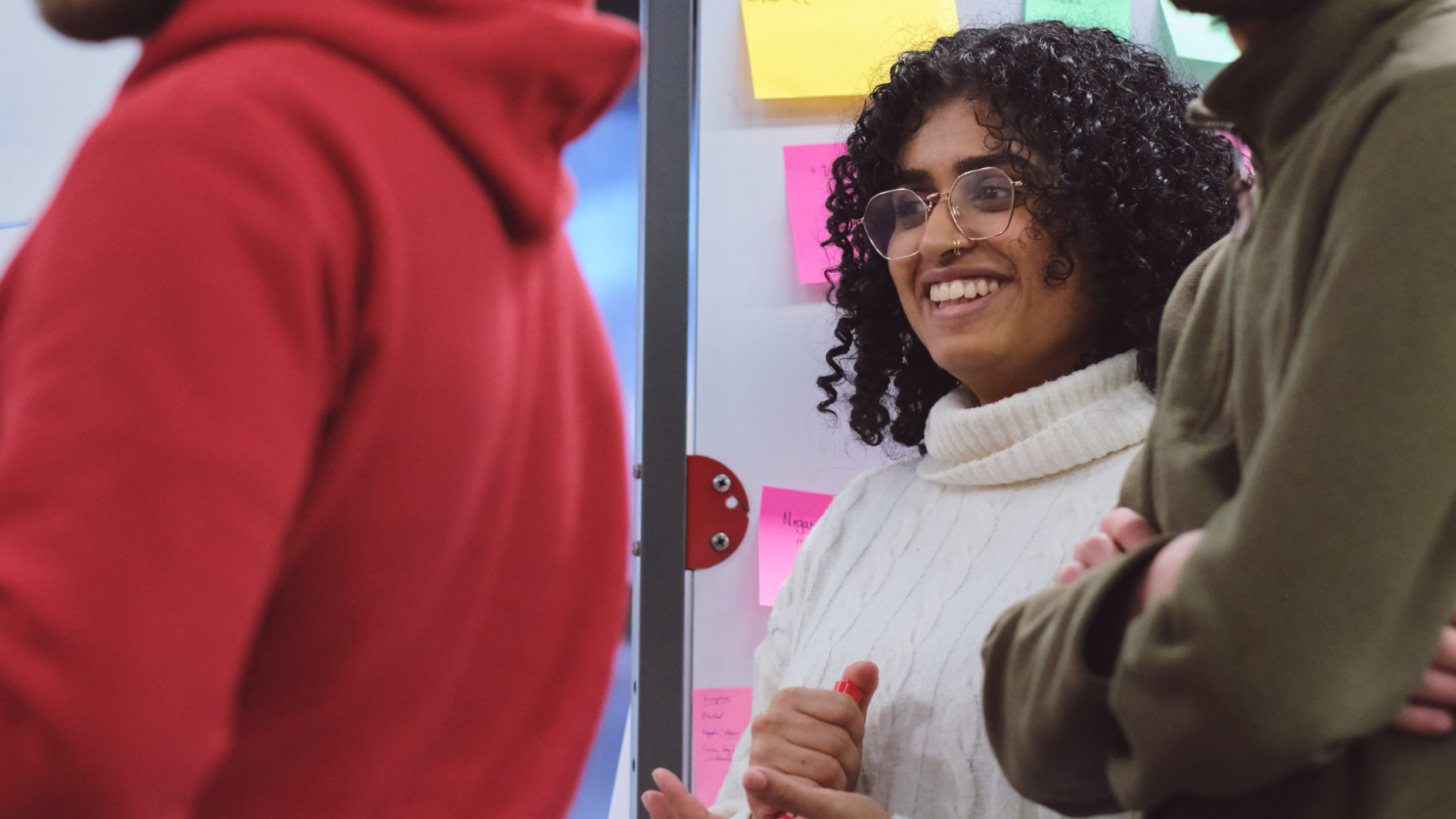
The Personal Statement project was first introduced to me as our program’s “entrance” into the design community. It was defined as an exploration of our design processes—making processes that excite us, stories that inspire us, and lived experiences that define us. And honestly, I struggled with this. The ask was so open-ended, and it felt like my work on precedent projects left me with some great expectations. During winter break, I spent a lot of time trying to determine what story I wanted to tell. Did I want to tell a story or create an experience? Should the experience be contrived or deliberately open-ended?
Inspiration: A moment on a swing
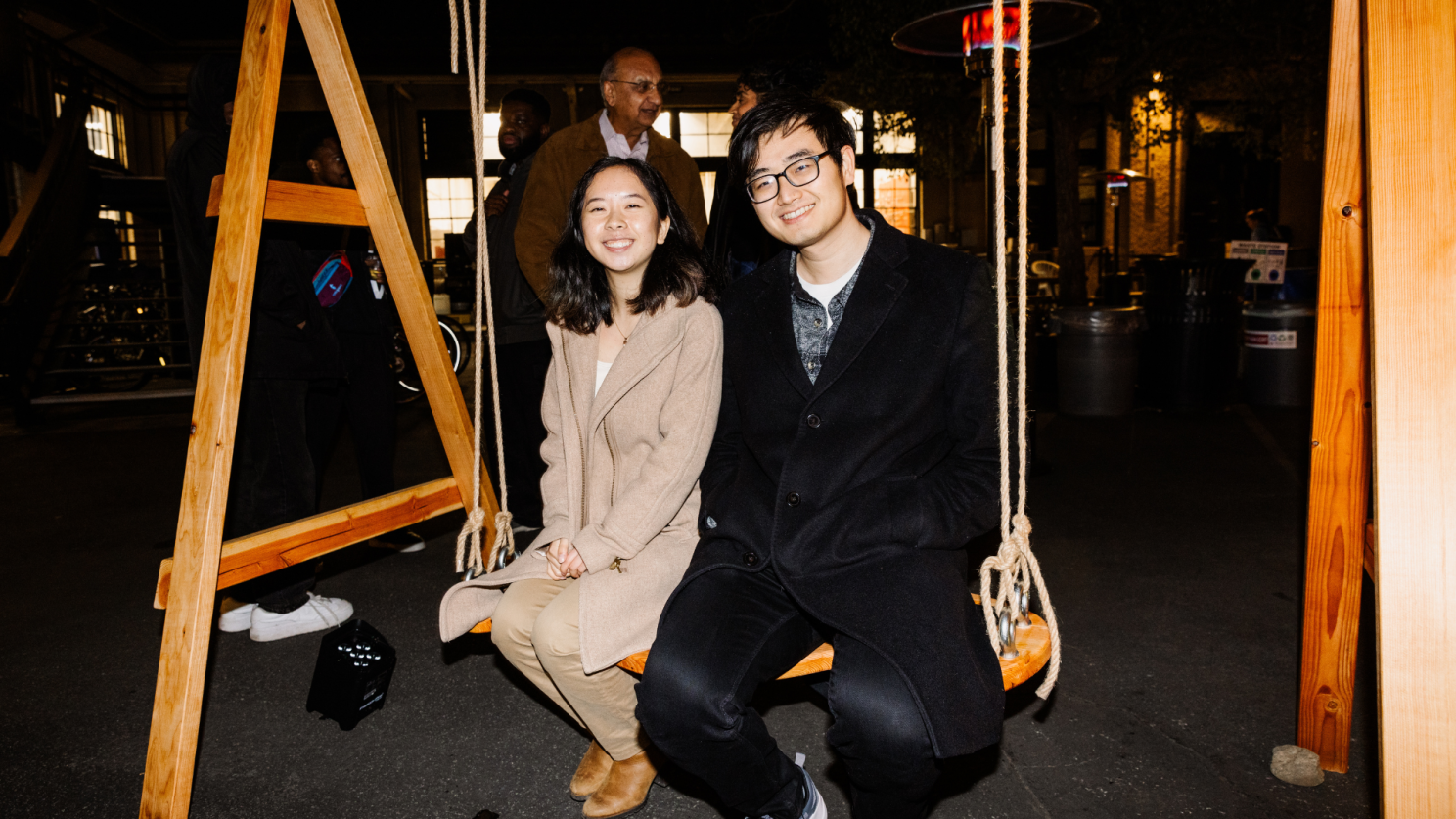
I was inspired by a conversation I had with my sibling around New Year’s Eve. We were sitting on their porch swing talking about how moments on swings are fleeting while we listened to Pedro Pascal’s interlude on Omar Apollo’s album "God Said No." Pascal talked about how a park bench brought him to his knees and how he asked it to “come alive and save [him].” And that stuck with me: so many people have vivid memories on a bench or swing, an inherently liminal space. These moments can be a second to catch one’s breath, reorient, adjust, or simply observe. What would it mean for me to create a swing that acted as a bench? A space where you can be alone or sit with someone, a loved one, or a stranger?
As someone who’s looked to music in moments of excitement, grief, contemplation, celebration, and more—and whose forever thought partner is their sibling—it felt appropriate to go down this rabbit hole as my personal statement.
Process: Finding the shape of aloneness
I always start a project by writing what I want to make and why, as I have found that journaling helps ground me. I then sketch out ideas and settle on two to three ideas I feel drawn to. Through this program, I’ve realized that I need to see how my community engages with my ideas around this time to determine a path forward. After getting feedback from a couple of close friends, I made a 1:3 scale prototype of my design to determine potential pain points in the process and finalize my “order of operations.”
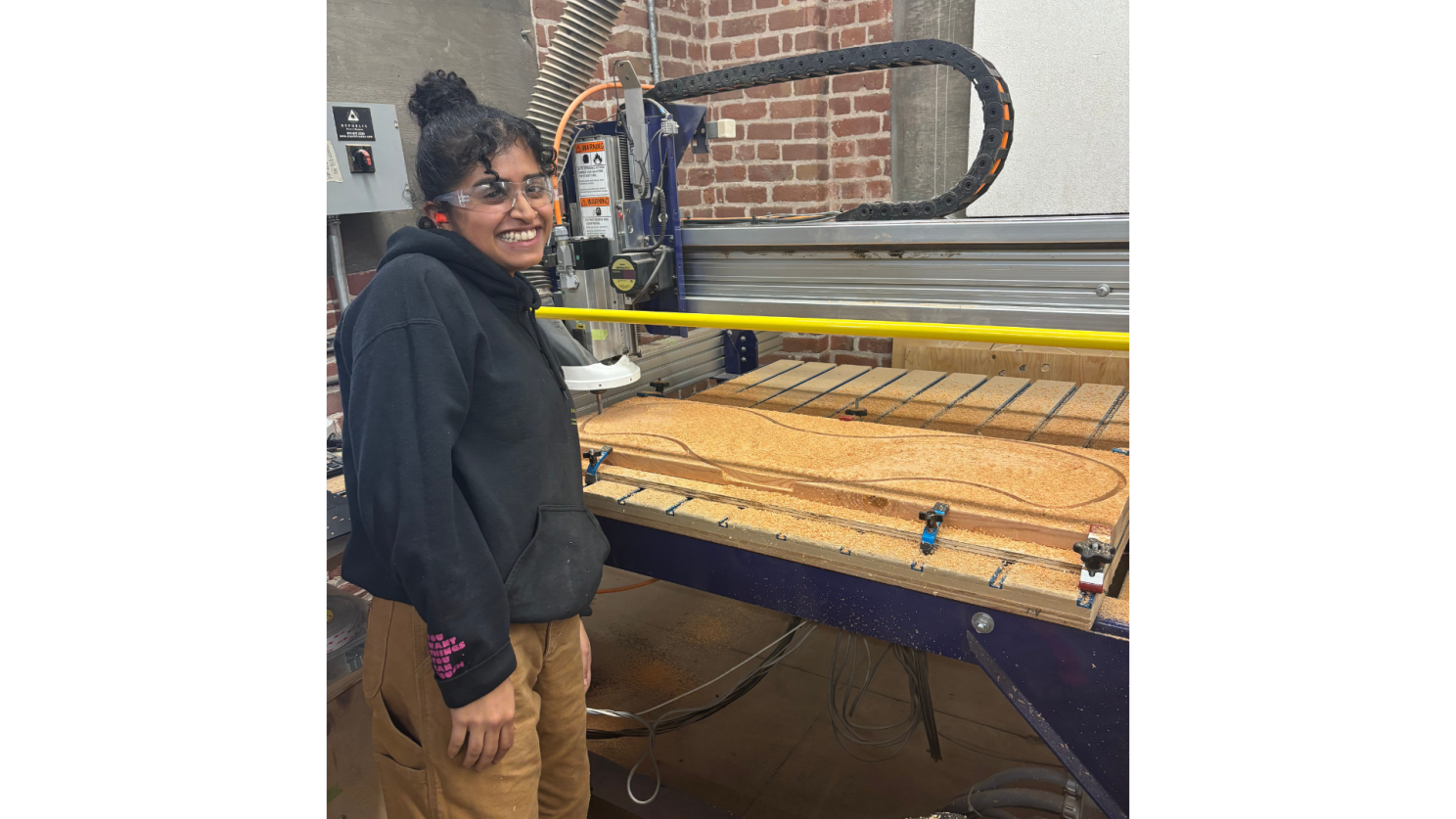
The scale of this project intimidated me, so I spent a lot of time agonizing and validating different structural aspects of the swing frame. I spent the most time making the swing seat. The intention was for one side of the swing to be for someone to sit alone: “for those who want a moment alone.” And the other side for two people to sit together: “for those who want a moment alone, together.” Thus, I needed to suggest the seating arrangement subtly, through the shape and added curvature on top of the seat. Also, a heartfelt thank you to my roommate and dear friend, Izma, for both holding me accountable to my practice and providing the inspiration for the shape.
Impact: Committing to the story
I could not have anticipated Personal Statements night. It felt incredibly vulnerable making this project, and seeing so many people resonate with and engage with my work made me feel heard and seen as a designer.
The Personal Statements project was the first time I truly listened to myself and committed to the story I wanted to tell. This leap of faith felt foreign but is something I want to embrace more moving forward. I hope to continue to take inspiration from people and things I love, and to create experiences for people to explore what community means to them. The moments of happiness I had while both making this piece and sharing it with the world are ones I hope to experience again in future design projects.
To connect and learn more, please visit my LinkedIn, Instagram, or kavyaudupa.com (currently under construction but available shortly).