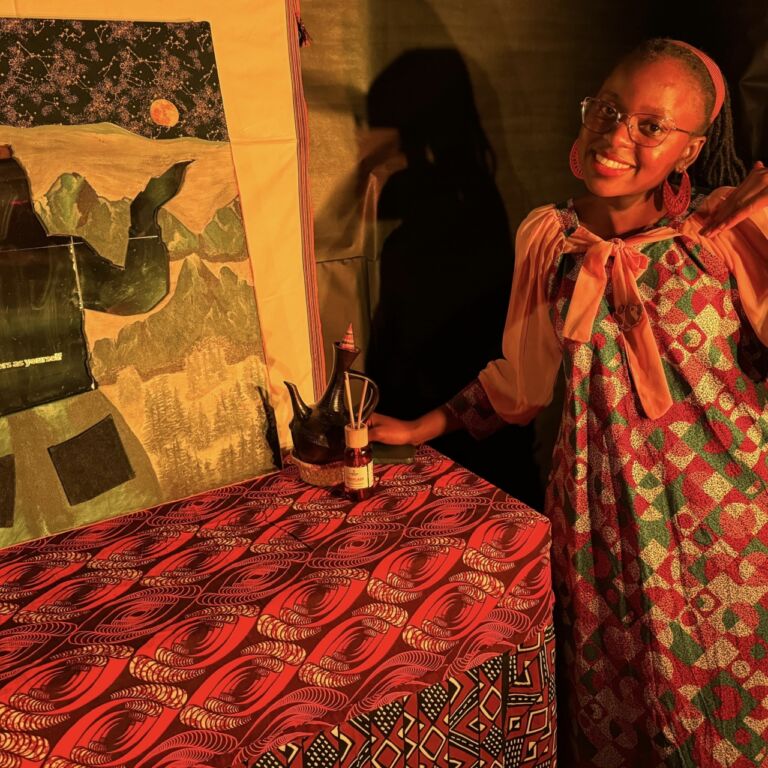
Personal Statements allow second-year design graduate students the opportunity to combine a physical product that is imbued with their emotions and values with a shared user experience. Here Maggie Namaganda shares her path to the d.school and her 2026 Personal Statement project in her own words.
"What Remains" by Maggie Namaganda
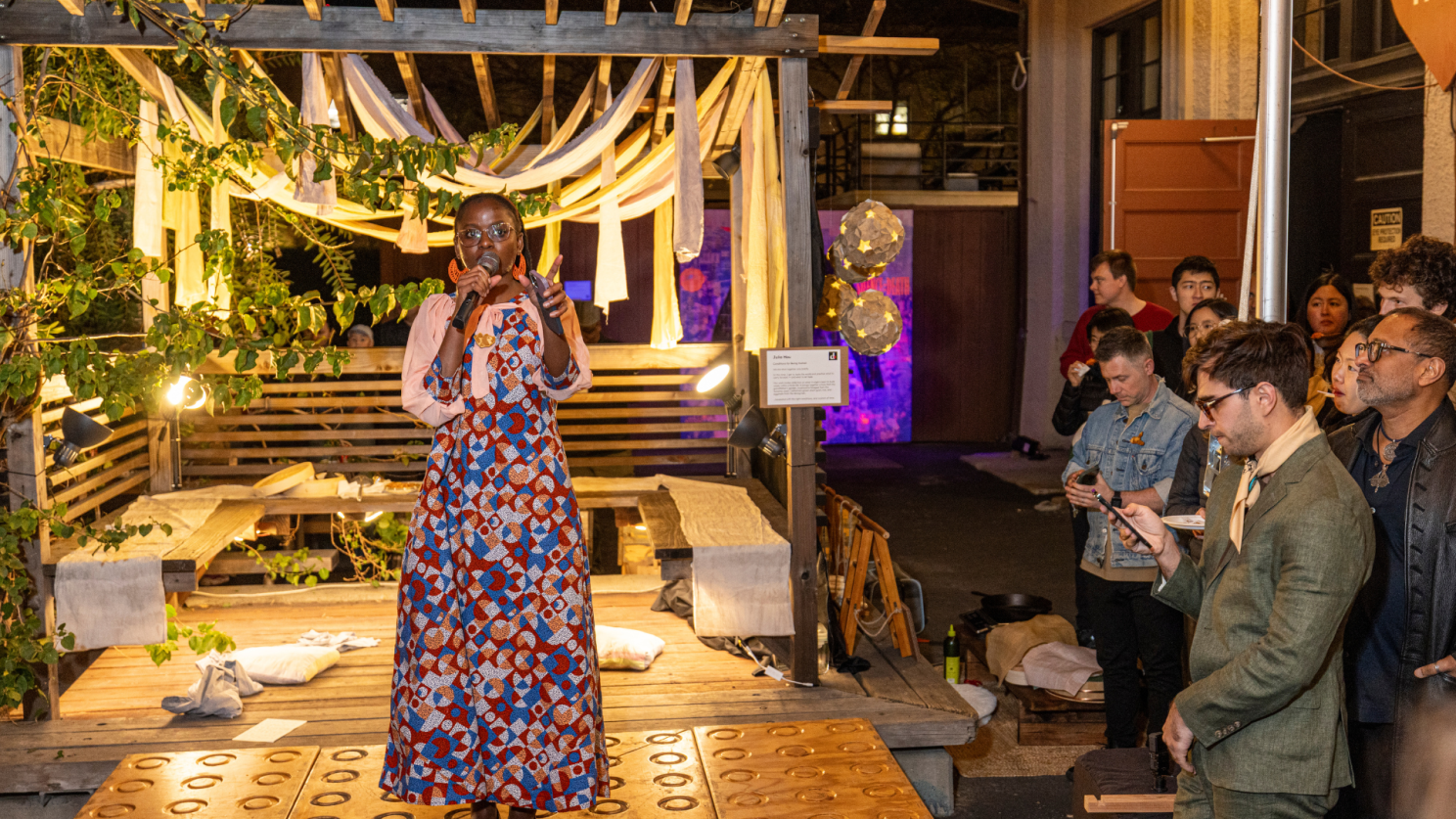
The road from software to social impact
I am a social impact designer. Before coming to Stanford, I worked as a software engineer, designer, and project manager, while also running an edtech startup focused on building technology for learners with disabilities in Uganda.
Through this work, especially in building and engaging directly with users, I began to see a clear gap between the products I was creating and the realities of the people I hoped to serve. Even when I spent time with users, I often found myself returning to the same instinct, offering software as the primary solution, even in contexts where the infrastructure, access, or readiness for technology simply was not there. It felt like holding a hammer and seeing every problem as a nail.
Coming to the d.school, I set out to expand how I approach problem solving, to move beyond software and deepen my design practice. During my time here, I have grown not only as a designer but as an observer of human behavior, a maker, and a storyteller. I have explored physical making, engaged with art as a way of thinking, and developed a more grounded sensitivity to context.
Today, I bring these together into a broader, more thoughtful toolkit, one that blends technology with human-centered, culturally aware design. My work now feels less about delivering software solutions, and more about shaping possibilities that truly fit the lives they are meant to serve.
At the d.school, I found a kind of freedom I had never experienced before, the freedom to follow ambiguity, to make decisions guided simply by curiosity, and to trust that not knowing was part of the process, not a weakness.
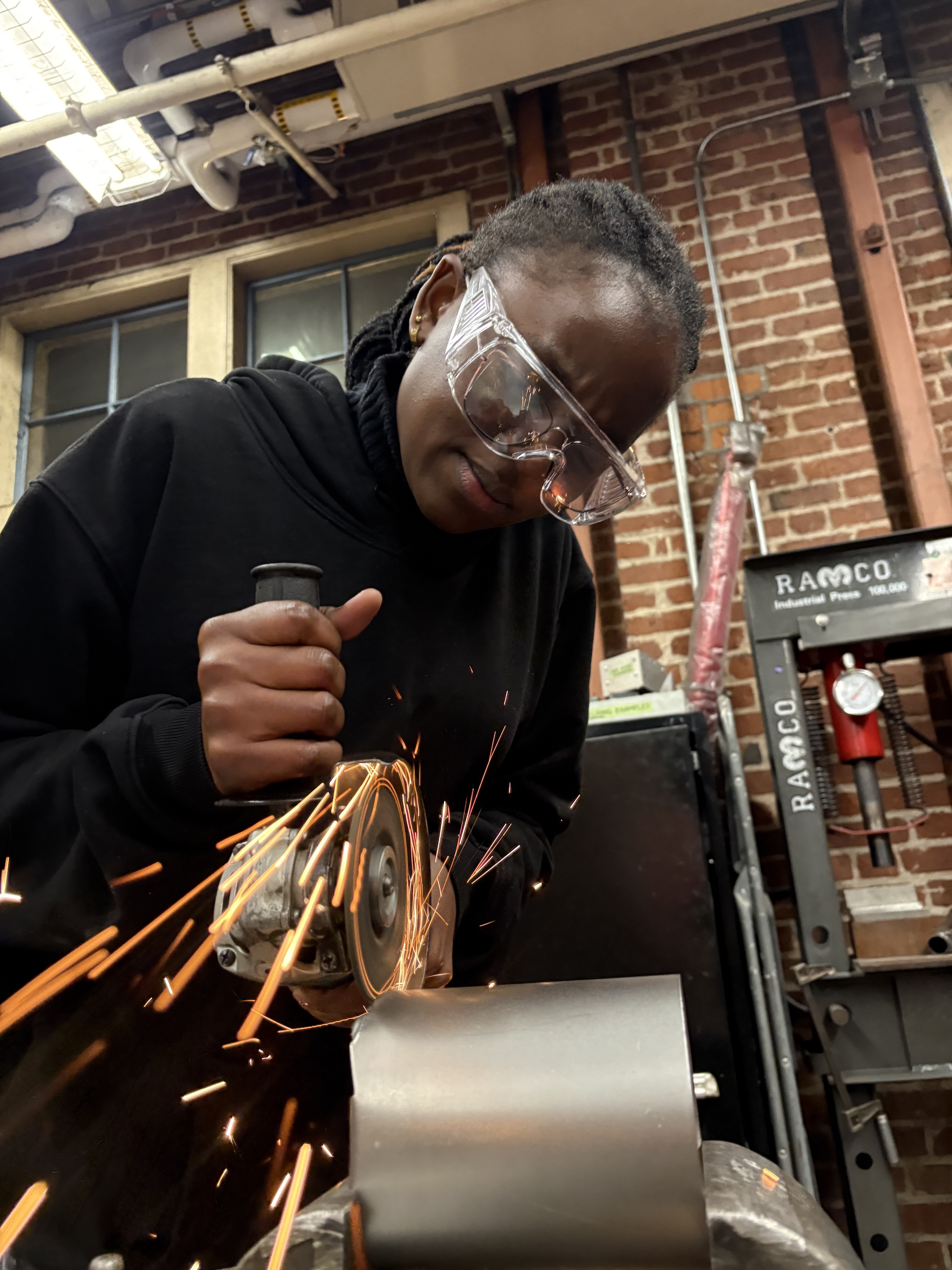
Redefining my relationship with uncertainty at the d.school
My first quarter was one of the most challenging seasons of my life, but in the most unexpected and exciting way. Coming from a highly structured and less hands-on educational background, I had never encountered learning that was so open-ended, so demanding, and yet so alive. I quickly realized that the very thing I feared most, navigating ambiguity, was not something to avoid, but something to lean into.
As someone who loves planning and being in control, this required a complete shift in how I saw myself. By the end of that first quarter, I made a decision that shaped everything that followed. I would spend my time at Stanford doing the things I was least comfortable with, choosing paths that stretched me, and following my curiosity wherever it led. And that is exactly how these two years have unfolded. As graduation approaches, I find myself holding onto the same principle that reshaped my time here. I want to continue choosing the paths that invite uncertainty, that stretch my thinking, and that keep my curiosity alive. Because in many ways, that is what this experience has taught me most, how to remain a learner, not just in school, but for life.
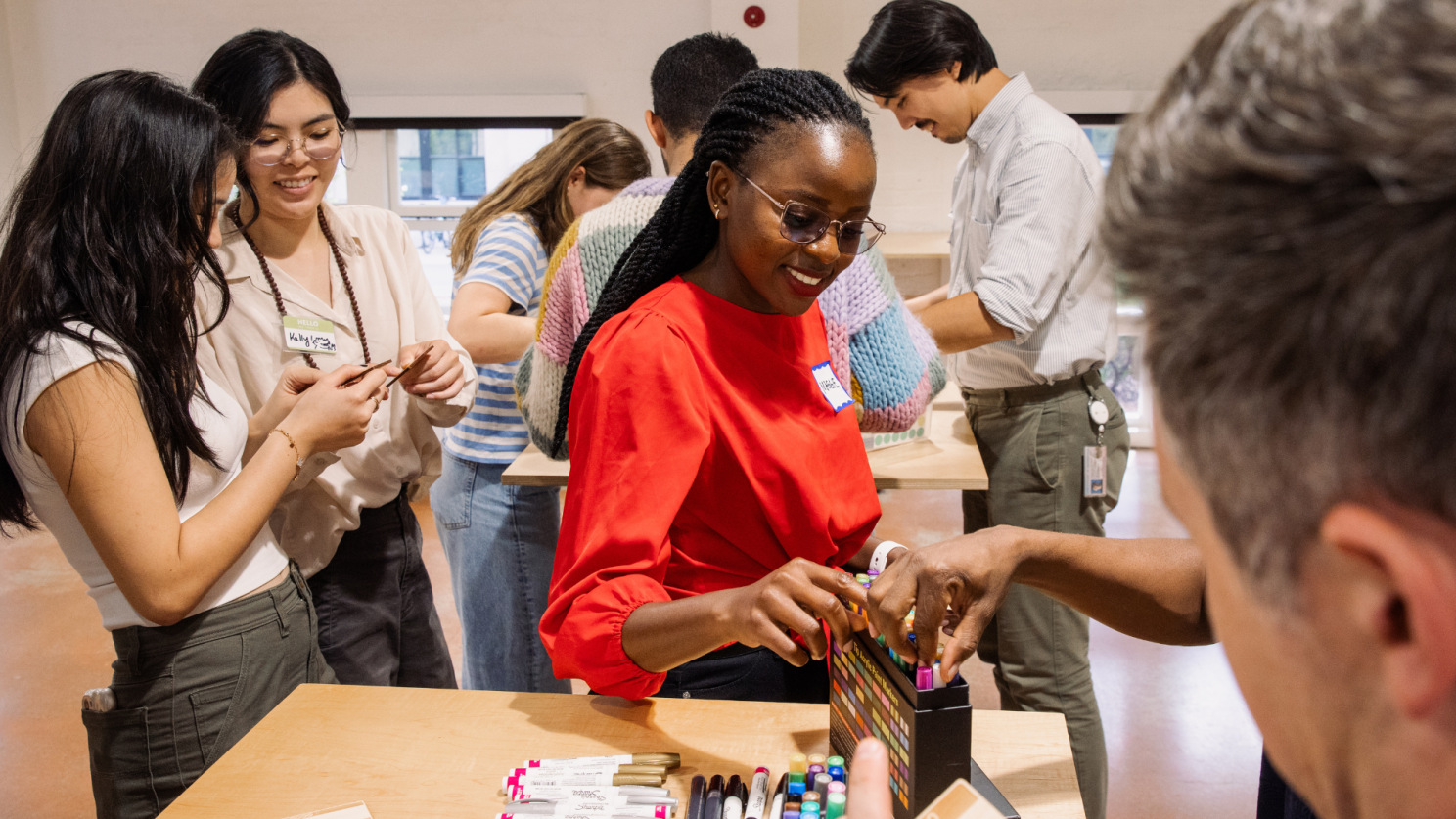
Faith, hope, and love as a design framework
My understanding of the personal statement project is that it invites you to introduce who you are as a person to the design community, while seamlessly expressing the kind of designer you are.
As I reflected on my personal journey, it became clear that the values that guide how I live, how I make decisions, how I relate to people, had to sit at the center of the project. They are not separate from my design practice, they shape it. At the same time, I wanted to explore how these values connect to the tools, mindsets, and approaches I have developed during my time at the d.school.
So the project became a space of integration, bringing together who I am as a person and how I show up as a designer. Not as two separate identities, but as one continuous story, where my lived experiences, my curiosities, and my design practice all inform each other.
I drew my inspiration from a deep reflection on my time at Stanford, looking closely at the values I have grown into, the experiences that have shaped me, and the people who have supported me to and through this season of my life.
At the center of it all was my faith. My personal statement project was grounded in a Bible scripture that has stayed with me from 1 Corinthians 13:13: “And these three remain: faith, hope, and love. But the greatest of these is love.”
I began to see how these three are not only spiritual anchors, but also deeply connected to my journey as a designer. They reflect the very things I have been learning, practicing, and growing into during my time here, and the principles I want to carry forward in my work.
Faith has become my way of navigating ambiguity, learning to move forward even when the path is not fully clear, and trusting the process as it unfolds. Hope gives me direction in moments of uncertainty, grounding me while also pushing me to imagine what could be, beyond what currently exists. And love, to me, is empathy in its truest form, choosing to see others as ourselves, and designing with care, dignity, and deep respect for the lives we are impacting.
Together, these values have not only shaped this project, but they continue to shape how I see design, not just as a practice of solving problems, but as a way of showing up in the world.
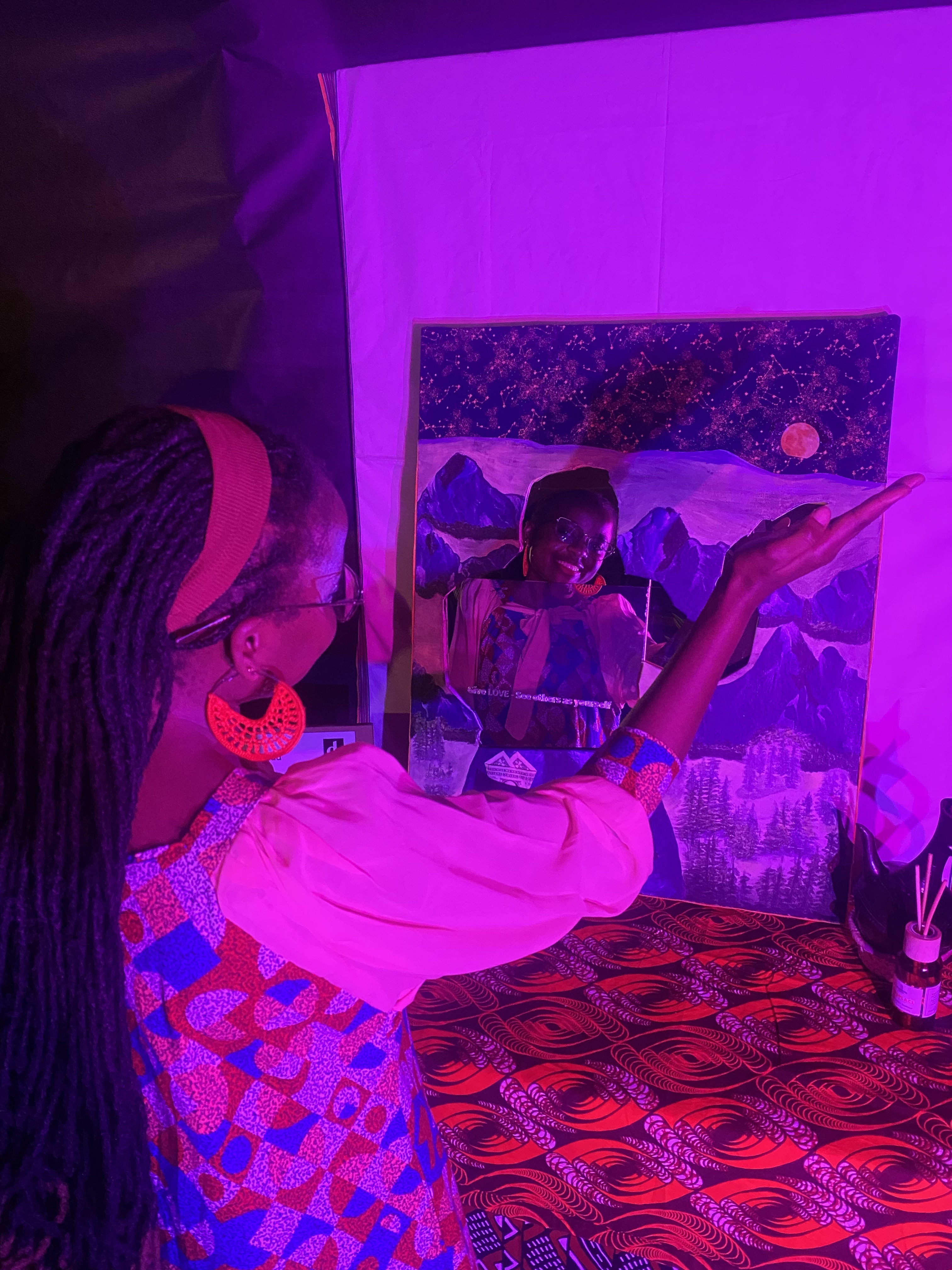
Choosing art as an act of courage — and homecoming
Once I had clarity on the message, I began exploring the different mediums I could use to express it. What felt like a real win for me was that, this time, a software solution was not my default instinct. I had options, and that mattered deeply, because expanding beyond technology was one of the reasons I came to the d.school in the first place.
I chose art, not just because it felt right, but because I wanted to reintroduce myself to it, and perhaps more honestly, reintroduce myself as an artist. For anyone who knows me well, this choice would sound almost unbelievable. Art has always been a space of discomfort for me. The first time I engaged with it seriously as an adult was in a class called Visual Expressions during my first quarter, a class I took out of pure curiosity about the professor (John Edmark), whose work I had admired before coming to Stanford.
As I developed the piece, I thought carefully about the materials and how they could carry parts of my story. In addition to paint, I incorporated fabric as a tribute to my mother, her hands, her tailoring, her creativity, and as a reflection of my African roots. I added a mirror, an invitation for reflection, both literal and symbolic, a reminder to see others as ourselves. It also holds a personal intention I carry daily, to remain beautiful, not just in appearance, but in how I choose to see, feel, and love.
One of the biggest tensions I faced was choosing between making something deeply personal and something more experiential for others. In a class chat with Scott Doorley and David Kelley, they re-echoed that this project should be personal over anything else. I quickly realized that most of the work I have done, both in life and as a designer, has centered on others. This was the first time I allowed myself to create something that was just mine. That realization was both unfamiliar and freeing. It gave me permission to follow what felt true to me, and in doing so, I found myself enjoying the process in a way I had not experienced before.
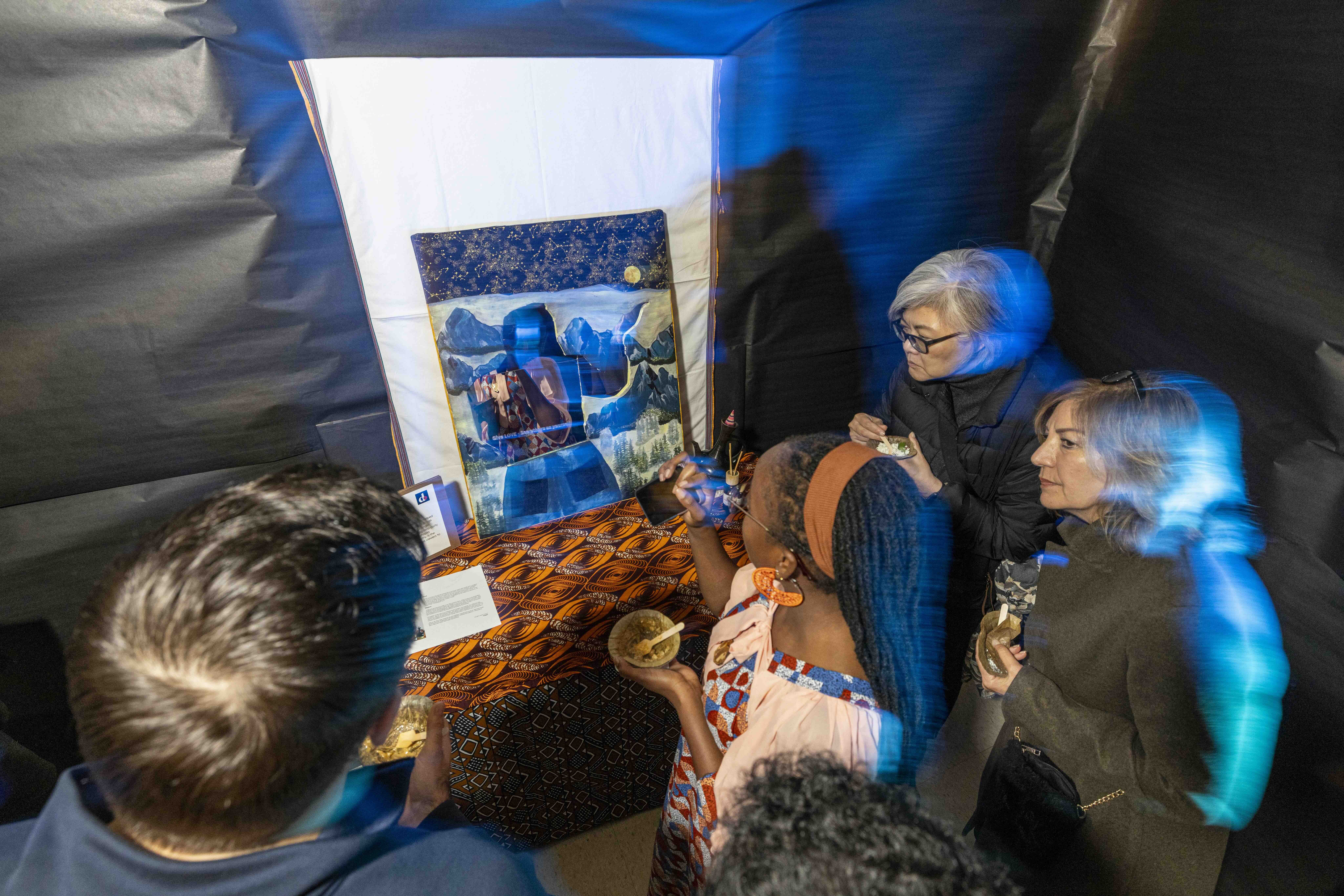
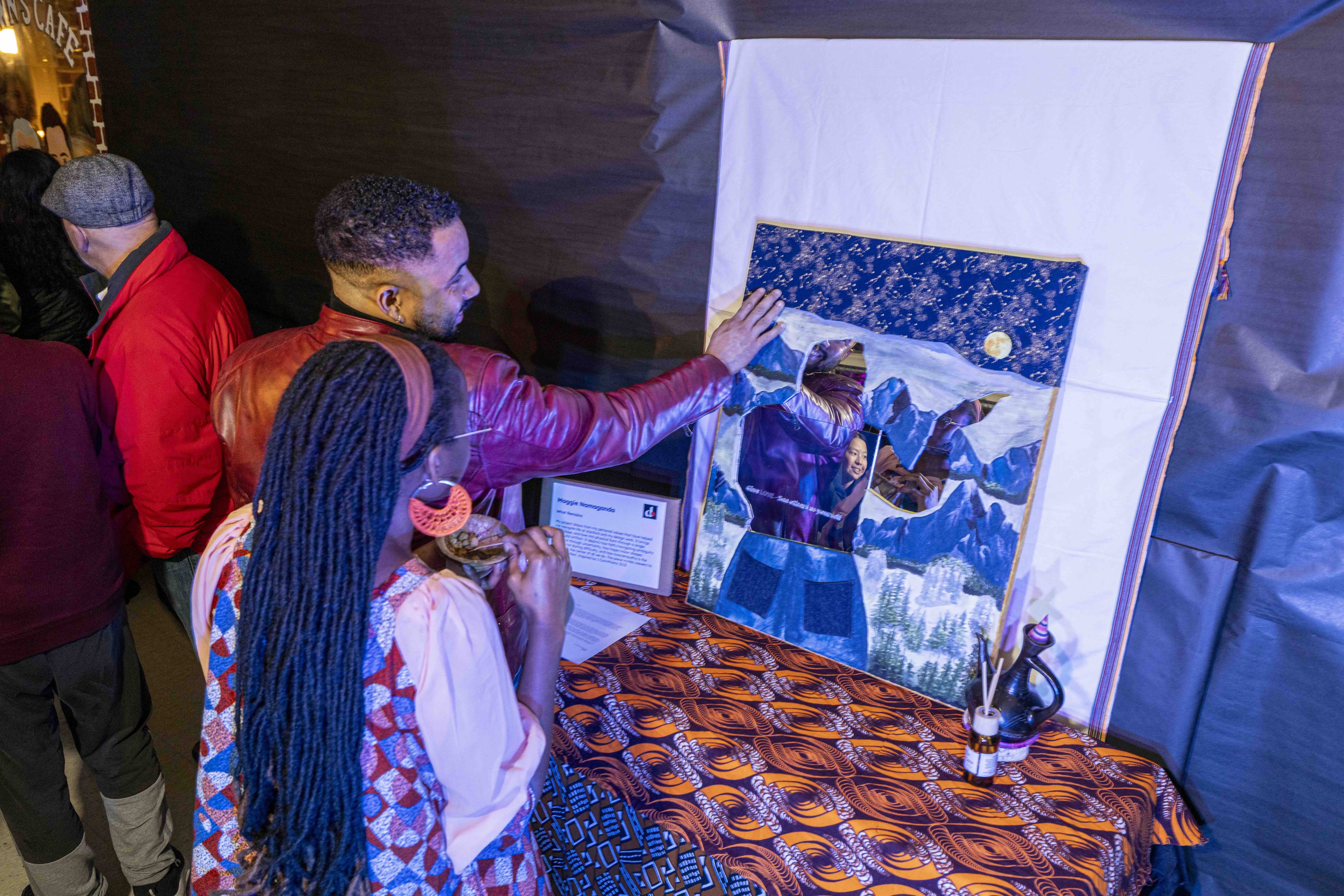
Collective vulnerability, sharing faith, and finding connection
I truly loved ticking the box of sharing my art, because it meant facing a fear I had carried for a long time. There was something deeply personal about putting my work out there, not just as a project, but as a reflection of parts of me I do not always show.
That night was emotional in the most beautiful way. Watching my classmates share their projects, each one offering something honest and vulnerable, created a kind of space that made it easier for me to do the same. There is something powerful about collective vulnerability, it does not just deepen individual experiences, it transforms the entire room. We laughed, cried, hugged and just leaned into it all! What a blessing it has been to share this time with such incredibly loving souls!!!
One of my biggest takeaways from this experience is the importance of boldly bringing myself into my work, without fear of how it may be perceived. I have realized that the more honest and personal I am, the more meaningful the work becomes, not just for me, but for the people who engage with it.
It was also a deeply fulfilling moment of reflection on my life and time at Stanford. As someone who naturally gravitates toward reflection and journaling, I found it especially powerful to do this through making, to let a project hold my thoughts, my growth, and my experiences.
I hope to carry this forward, to intentionally create space for projects like this that allow me to pause, reflect, and reconnect with myself. Not just during seasons of transition like school, but as an ongoing practice in life.
Check out my little corner of the internet here or LinkedIn.