Founded in 2023 as a hub for creative expression, the d.school Community Printshop is a makerspace for letterpress and risograph printing that attracts students from across the Stanford campus to collaborate on projects that make their ideas tangible. Run by Patrick Fenton and Owen Hipwell, they provide free supplies and project consultation in an effort to bring in users from across the university in a collaborative environment. It’s open to Stanford students, staff, and faculty both through elective courses and open shop hours.
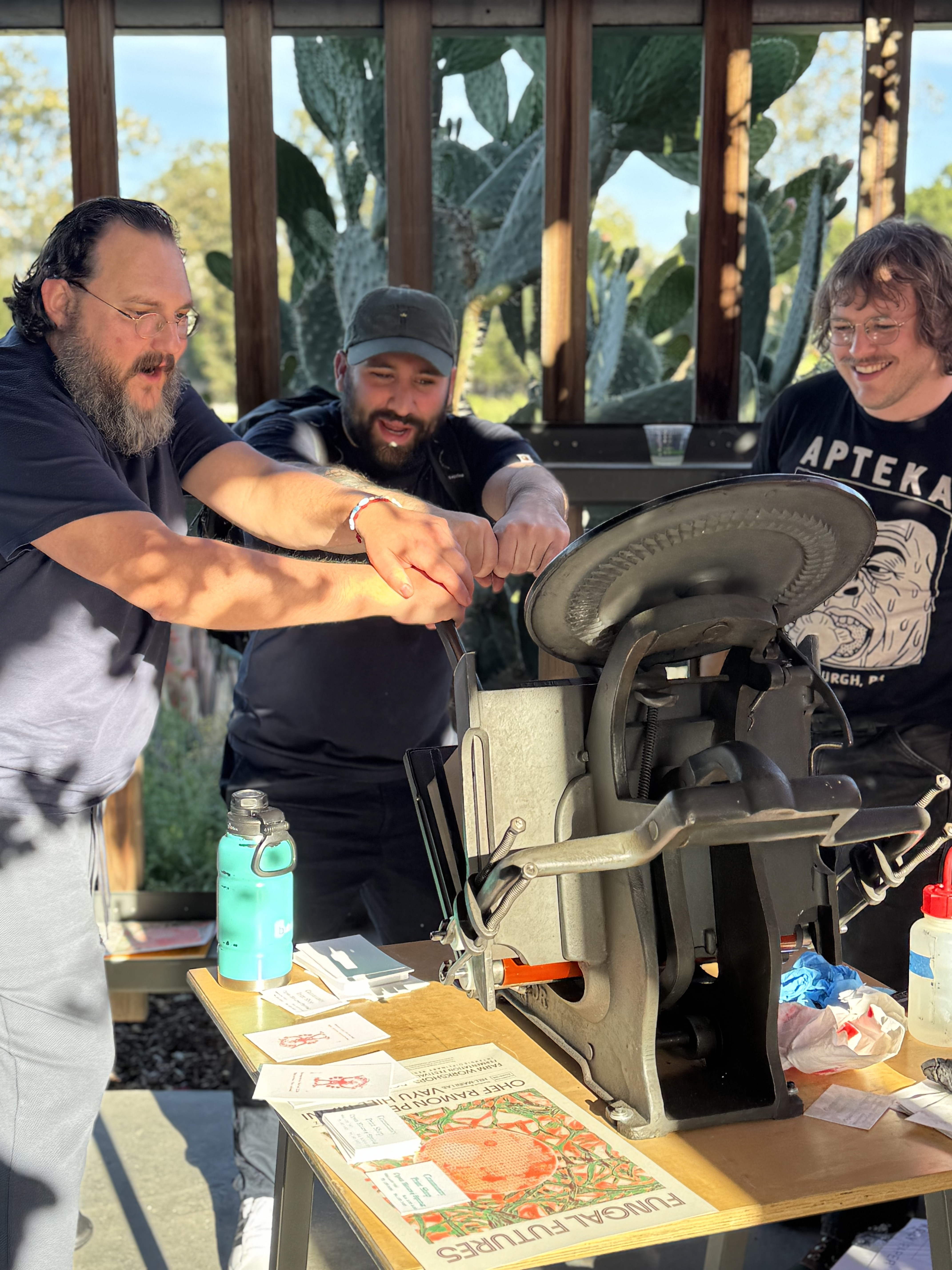
We created the Community Printshop to serve the community. In April 2026, we got a unique opportunity to do just that while working on our most ambitious project to date: a 52-page zine made in a collaboration with the Hill-Maini Lab.
Vayu Hill-Maini is an assistant professor of bioengineering. His lab studies the future of food and works closely with chefs to bridge scientific research and gastronomy. Recently, as part of the Doerr School of Sustainability Visiting Artist Program, two chefs from Mugaritz, a restaurant in Spain long-considered to be among the ten best restaurants in the world, were invited to the lab to explore ways to use Neurospora fungi to process food waste and produce experimental food and drink. Support for the project was provided by the Office of the Vice President of the Arts.
The collaboration with the Printshop arose from a chance meeting. Professor Hill-Maini and visiting chefs Ramón Perisé and Jordi Bross were taking a tour of the Product Realization Lab when they happened to stumble upon the Printshop. Impressed by the student zines produced in Design 236S: Community Printshop Studio, they inquired if it was possible to produce their own zine at the end of their year-long residency.
After some initial planning meetings, the Hill-Maini Lab team began soliciting work from more than 30 collaborators. On the printshop side, Patrick Fenton and I provided production oversight, while Design junior Aaron Zhang and Design + Computer Science co-term Madison Fan worked with the contributors on the graphic design and layout.
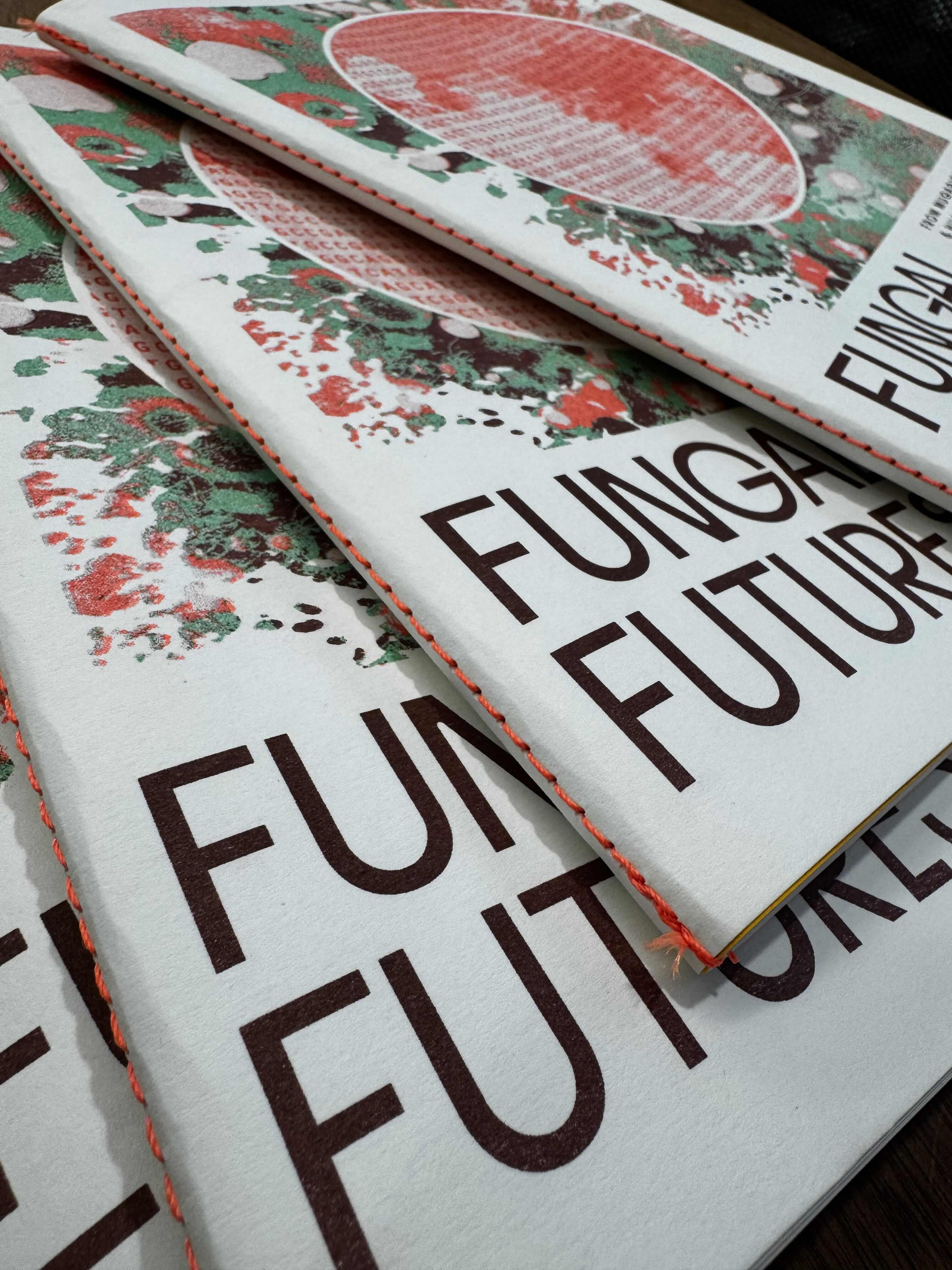
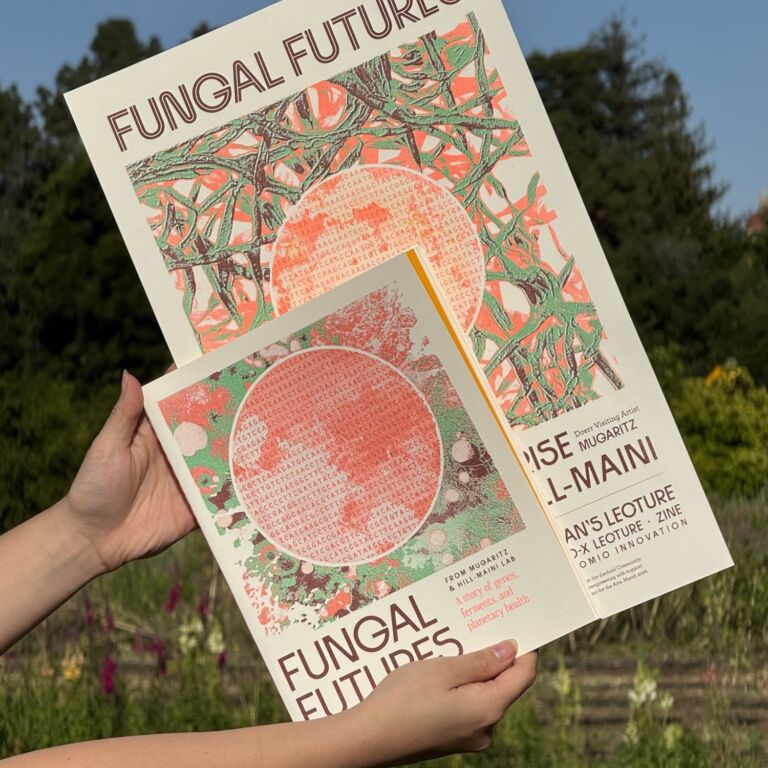
What emerged was Fungal Futures: A story of genes, ferments, and planetary health, a zine that showcases research, recipes, creative writing, and art that was produced by members of the lab and their collaborators over the course of their research into the neurospora fungus.
The zine was Risograph printed using a four-color process, with an additional letterpress layer for the cover. The binding of each zine was sewn on an Artisan walking-foot machine using fluorescent orange thread. Orange was chosen as the central color of the zine to match the traffic cone-color of Neurospora fungi. The printshop group produced an edition of 500 copies, which were distributed at the Fermentation Festival held on the Stanford Farm to celebrate the end of the residency.
This project was a fantastic opportunity to explore how printing and design can bring in partners from across the university and around the world, and give research an exciting new twist.
Read more about the Hill-Maini Lab in the Stanford Report and about the Fermentation Festival in the Stanford Daily.
Credits
Written by Owen Hipwell with assistance from David Martinez and Jennifer Brown.